Festival Ecrã 2023 - A Few Notes
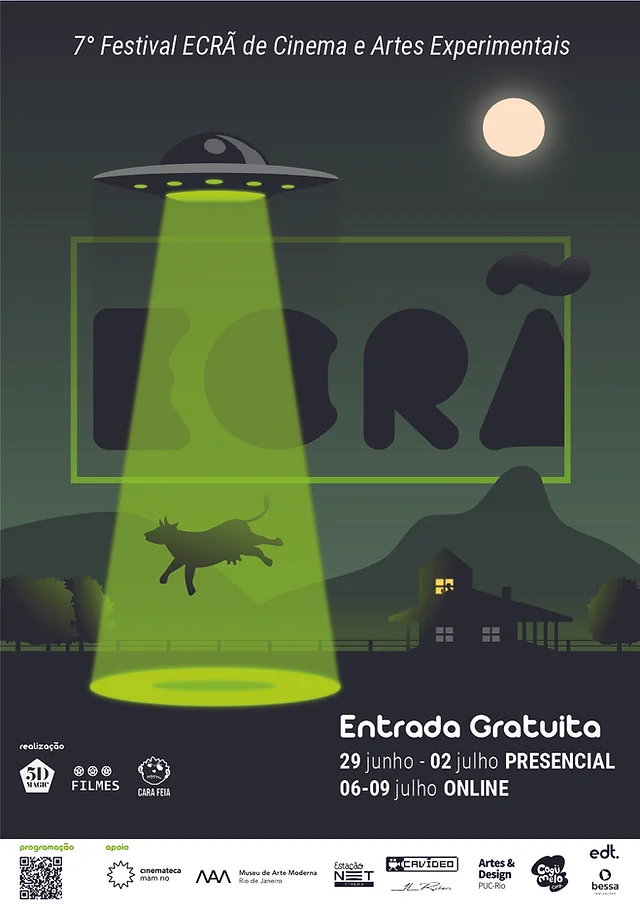
Festival Ecrã is one of the most important venues for showing experimental cinema in Brazil — I've been following its trajectory since 2018, and this year, because of the short window of its in-person leg (just 4 days, unlike the 10 days available in 2022 and in 2019, pre-pandemic), I couldn't watch many works, but I wrote a few brief notes on some of the pieces I saw at its 7th edition.
Personally, it was a somewhat "easier" edition to follow this year, given that we weren't in an election year, and had secured Lula's victory in the 2022 presidential election — that brought a certain relief when it comes to imagining a future for cultural funding and for the survival (at least in the coming years) of Brazilian experimental film festivals. Still, I write this with a certain melancholy, having noticed that the festival was forced to cut back its usual number of days, though that thankfully didn't affect the singular, distinctive quality of the works selected.
Below, a list of films from this year's edition that stuck with me — these aren't all the films I saw this year, but they're the ones most lodged in my memory at the time of writing this post:
_
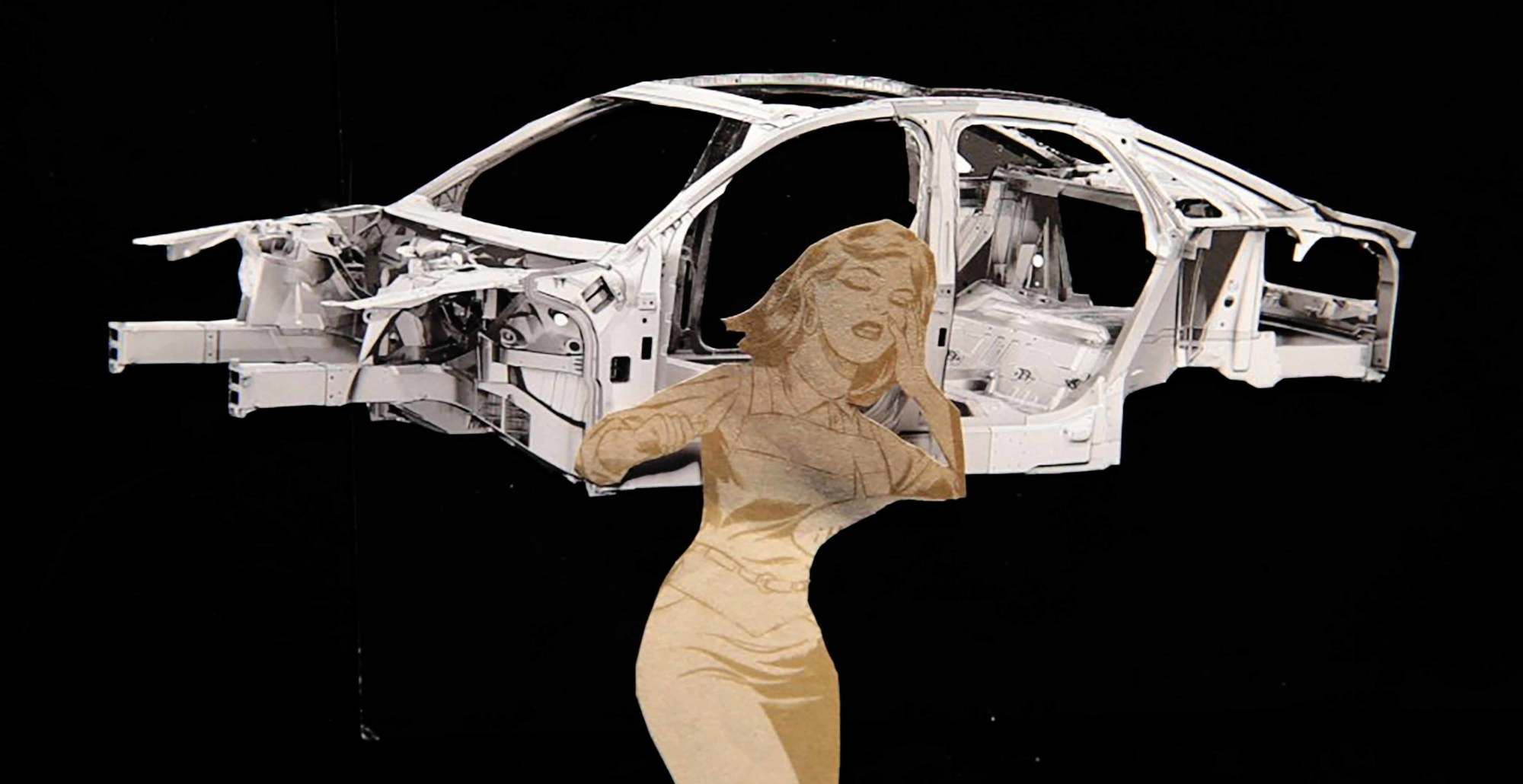
THE BLUE ROSE OF FORGETFULNESS | idem | Lewis Klahr | United States | 2022 | 64 min._
This was the first Lewis Klahr film I've ever seen, and what struck me was how his use of comic-strip bricolage builds a narrative flow that exists not through the presentation of a clear line, but through graphic processes of analogy-making. The film draws on certain movements of American genre cinema (romance, thriller, superhero film) to compose a poetry made of wreckage, a process of collaging elements that in theory exist separately and dispersed from one another, but that, through graphic combination, create a very singular and impactful romantic melody — this was my introduction to Klahr's work, and I can hardly wait to get the chance to watch his other films.
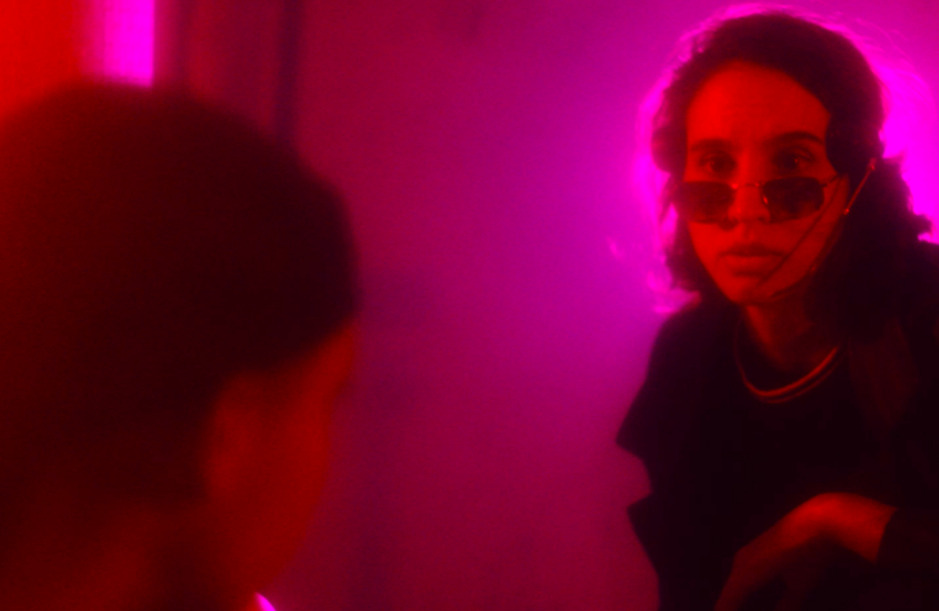
LIMINAL SPACE | idem | Gabriel Papaléo | Brazil | 2023 | 75 min
Like a visual album of Carioca cyberpunk aesthetics, Papaléo's first feature manages to build a sense of melancholic ambience through its kaleidoscopic photography of neon, and through its plot — semi-Alain Resnais in spirit — of a man searching for an idealized memory of his lover. The film is at its best when it gives itself over to being purely a formal exercise in experimentation, when it presents itself as an atmospheric visual album, rather than when it tries to explain its world in narrative terms. As a sensory experience of prismatic phantology of a dystopian future (and past), the film represents one of the most energizing and captivating screenings I had at the festival.
_
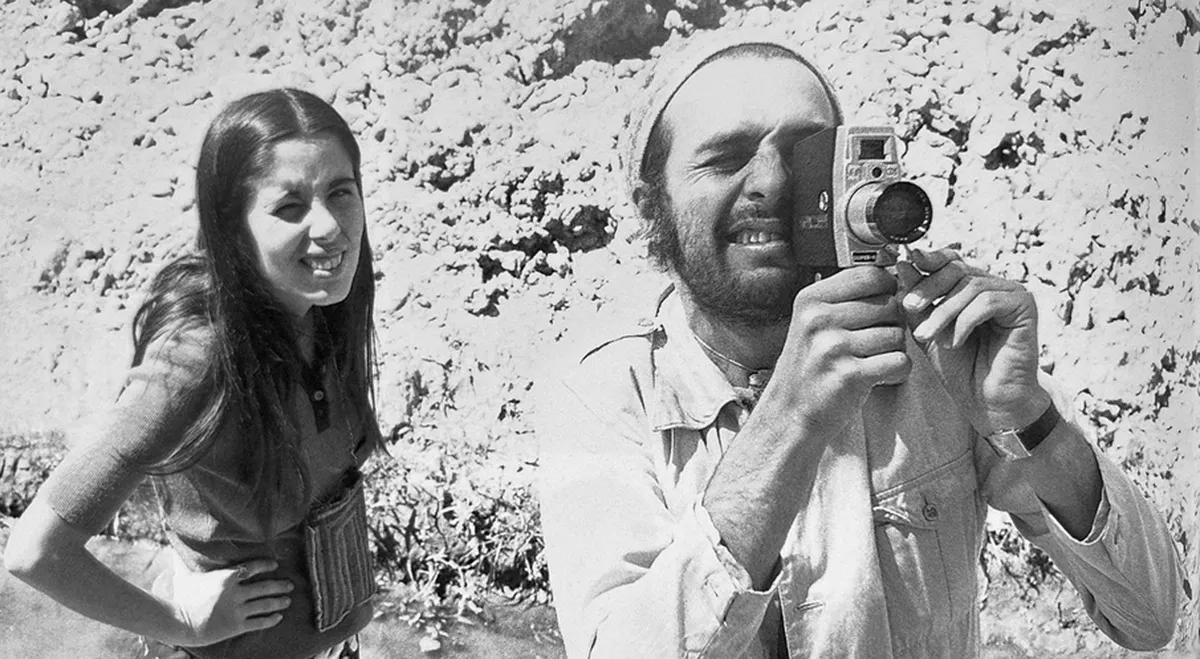
_THE LONG JOURNEY OF THE YELLOW BUS | idem | Júlio Bressane, Rodrigo Lima | Brazil | 2023 | 432 min.
Bressane's trajectory and his obsessions glued together into a dazzling audiovisual cartography, a 7-hour journey whose accumulation is the experience of a life lived in its entirety, a poetry of the human vessel in search of the unknown, or, as Bressane himself put it after the screening, the search for "_nothingness_." I don't think I'll feel anything quite as touching again as when I realized that, after almost 8 hours sitting at the MAM Cinemateca, almost no one had abandoned or left early from the colossal challenge this film represents. A meditation on the transformative, collective character of being in a movie theater, on having faith in the image, in the unprecedented, unknown paths this yellow bus can take us down.
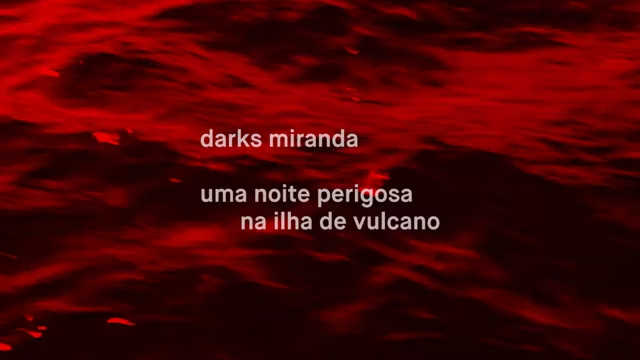
A DANGEROUS NIGHT ON VULCANO ISLAND | idem | Darks Miranda | Brazil | 2023 | 40 min.
An archaeological investigation built from archival landscape footage taken from science-fiction films of the 1940s–60s, this medium-length film directed by multidisciplinary artist Darks Miranda is a continuation of the thematic concerns found in her sculptural work: the creation of a perpetually adrift universe, alien through the complete desolation of the human figure, the brutality of its inventory, and the use of an ominous sonority that underscores the infernal quality of an apocalyptic liminal state, of the end of humanity and a return to the Earth's origins. Nature exists before, and beyond, the human, and the film presents that idea on a captivating sensory level.

RAW RED | Idem | Amanda Devulsky | Brazil | 2022 | 203 min.
A key scene in Vermelho Bruto (Raw Red) comes in the film's second half — we're watching footage recorded by one of the mother-protagonists, at the moment the results of the October 2018 election come up on her television, and we hear a dialogue between her and her daughter, explaining, in a soothing way, what the coming dark years in Brazil will be like, trying to help her young daughter understand an abominable political context while also trying to keep her head up and dedicated to her domestic responsibilities. As we listen to this dialogue, the camera sits on a table in the living room (I don't remember exactly what object it's focused on, whether a vase, a radio, or a dinner plate — my memory is a little hazy, but I can still picture the scene), and we, the viewers, never see either the daughter's or the mother's figure while the scene unfolds.
This moment in Amanda's film is the perfect illustration of the formal approach the filmmaker uses to tell these women's story: the creation of new ways of seeing and hearing. The radicalization of what's permitted to be heard, or listened to, at a given moment. And the creation of a language that forces the viewer to build their own mental space to house this off-screen presence, a participatory reading that pulls the viewer out of inertia and comfort, especially given the long runtime, which spans several characters across different geographic and social contexts.
This is, somewhat similarly to Bressane's film, about the creation of a cartography that builds new models for perceiving the idea of a home-movie film, of thinking through the non-division of politics within domestic and personal contexts, and the texture of its images offers an inventive way of portraying the constant agglutination of these elements in Brazilian life. Of this non-reconciliation with fascism, both macro- and micropolitical.
It's one of the best films of the festival and an extraordinary discovery I made this year, and an artistic triumph not only for the filmmaker but also for Darks Miranda, co-editor of the film.

SILENT WITNESSES | Mudos Testigos | Luis Ospina, Jerónimo Arteaga | Colombia | 2023 | 78 min.
The final film of filmmaker Luis Ospina is built from the editing together of twelve works of Colombian silent cinema to create an imagined narrative: an impossible romance between a couple from different social classes. A classic melodrama that undergoes a process of internal combustion in the film's final section. What struck me most was how the film used a linear, classical structure in its narrative composition in order to, in its final section, veer into a dispersed, fragmented, inconclusive path, one that might in itself reflect the country's own open sociocultural path. My knowledge of Colombian history is limited, so I can't offer a claim as to whether this formal rupture signals a feeling of filmic catharsis in relation to the very rupture the country suffered, but as a romantic tale that ends in an infinite opening of aesthetic possibilities and of the reformulation of historical archives, it's a work I'll hardly be able to forget.