Cinema Was Born in a Dance Studio: A Conversation with Marcela Borela
On dance, archive, friendship, and the right to fiction
Encounter record
Marcela Borela · about three hours
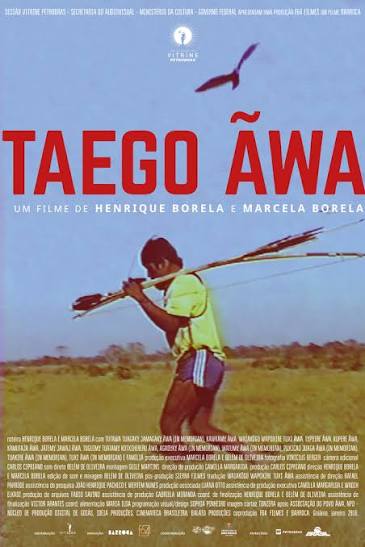
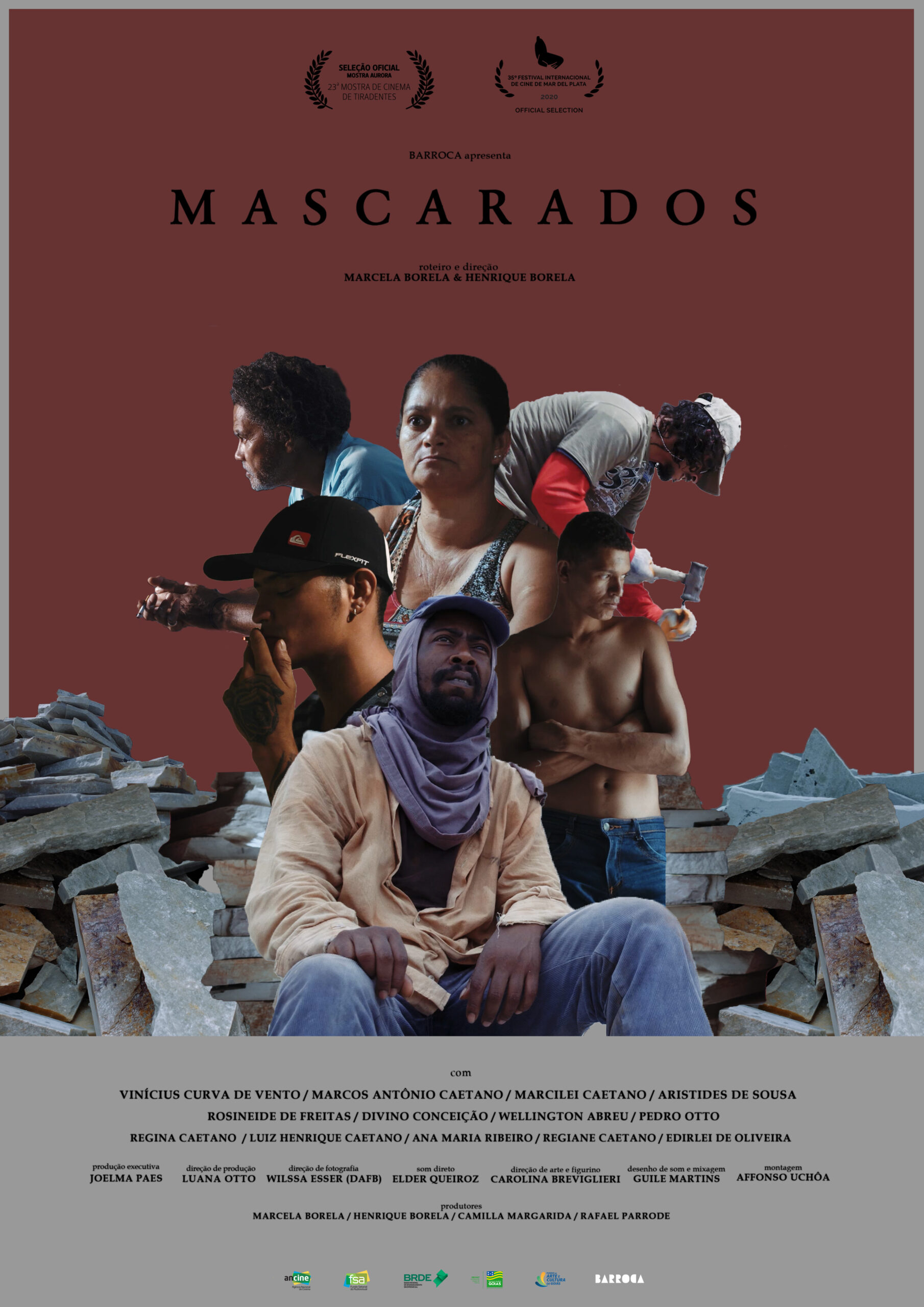
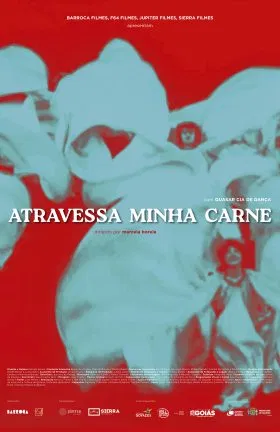
On the eve of this conversation, I watched the three feature films directed by Marcela Borela: Taego Ãwa (2016) and Mascarados (2020), both co-directed with her brother, Henrique Borela, and Atravessa Minha Carne (2025), her first feature as sole director, which had just held its premiere at the Cinemateca do MAM, in Rio de Janeiro. Shot in 2013 with the Quasar Companhia de Dança, in Goiânia, and completed twelve years later, the film carries in its own body the discontinuity that ran through cinema — and through life — in Brazil across that interval. We spoke for three hours about dance, archive, friendship, the right to fiction, and what cinema is capable of. The conversation that follows was edited only at the surface: nothing that was said has been altered.
I. A Kind of Illness
Marcela, congratulations on the premiere of Atravessa Minha Carne. Yesterday I had the privilege of watching three feature films you directed — two in partnership with Henrique Borela and this last one, which you directed on your own. I wanted to ask something more general before getting into the specifics. I know you're also a teacher, someone who studies the history of cinema and the history of Brazil. How did the interest in creating and making cinema, in practice, come about over the course of your life, up to your first feature and up to Atravessa Minha Carne?
First, let me thank you for the invitation, Francisco. I think the first time I saw you was at the Cinemateca do MAM, this place that for me has basically become a second home — and where Atravessa Minha Carne has just held its premiere.
Well, I've worked in cinema for two decades. It's a curious thing to reconstruct, but I think we can do it. Francisco, I was a dancer. I grew up in Goiânia; I was born in the Triângulo Mineiro, on the far side of the border with Minas Gerais, in '83, and as a little girl I went to Goiânia with my parents. I was a child and an adolescent who danced and who wrote. That was my universe, truly. And I was never much for cinephilia. Unlike most of my cinephile friends, I didn't have that in me. I only start going, for instance, to the Cine Cultura — the public cinema in Goiânia, the home of cinephilia in Goiás, which I even end up running for a while, much later — once I'm already in college.
But when cinema installs itself in my life, I trade everything for it. I stop dancing, I stop writing poetry, and I go make cinema. I think what happened was a kind of illness. You know those things — like an autoimmune disease you have, except you only find out at a certain age?
Exactly. Sometimes that's it: when it happens, it's as though there were no longer any other option. It was a rainy Carnival in 2003, 2004 — now I don't even remember the date anymore. Since I came from dance, I had some friends, people who knew things. At that time I was a dance teacher, so we produced the shows: there was all this business of preparing costumes and sets, and I had some skill with that. And a friend calls me to help with a costume for a short film that was going to be shot during that rainy Carnival in the interior of Goiás. He asks me: do you want to come along? I said: God, yes. I get there and the set… The film was called Visita Noturna, and the whole set was at night. And that inversion of day and night, this working by night and preparing the set by day, and this — how do I put it? — the idea that there's a fantasy that can be organized within reality, and that we can go on to film it and work on it… I think I had no idea this was possible. That this was a life to be lived. I leave that set with my first script already in my head. I write a little and Poupe-me dos Detalhes Sórdidos is born, my first short — a student film, made with friends.
At that time I was doing the occasional gig, because I studied Communication, Journalism, and I did some freelancing at a production company in Goiânia. One day the guy there asked me: don't you have a project of your own? I said: I wrote a script. Really? I want to see it. This is Ronaldo Araújo, by the way, an absolutely crucial figure in the history of cinema in Goiás. I don't know if you've ever heard of a project called Cineclube Antônio das Mortes — it's where an amalgam of experimental cinema happened in the '70s and '80s in Goiás. The person who has studied this well is Rubens Machado, over at USP; he's already written a good historiography of that experience. And Ronaldo is the great cinematographer of that Goiano experimental cinema. And he says: what do you need? Take this — camera, sound… And so I shoot that first film. In early 2005, 2006, it goes to the festivals, several incredible university festivals that existed in Brazil and don't exist anymore, like the Putz, the Noia, the FBCU itself. There was a really wonderful university-cinema circuit.
And I made the second short still in that spontaneity, with no money, with this partnership of "lend me a camera here, lend me something there": Boca no Lixo, with the sanitation workers of Goiânia. I think these first two shorts, thinking about it here with you now, are already a kind of image of a certain dichotomy: between an experimental perspective, a cinema of poetry, clearly non-narrative, and another cinema — which is the same one, I know now it's the same one — that was fascinated by the surface of the world and by labor. These bodies that fabricate the world and, in fabricating the world, fabricate themselves. It's a fascination, it truly is a fascination. And it began there, with the city's sanitation workers hanging off the garbage trucks. There, at 21, 22 years old.
II. My Teachers Are the Filmmakers Who Are My Friends
As I'm coming out of my undergraduate studies, I already have a very strong desire to make a film out of the artistic universe I find in Goiânia. And here it's nice that you mentioned someone who's going to enter this story now, who is my great friend Adirley Queirós. We meet in 2007 — I'm doing DOCTV and so is he; he was there in the aftermath of Rap, o Canto da Ceilândia. We become very close and he really does enter my life.
In Goiânia, at that time, before 2010, 2011, I was very alone. There were the people we did things with, friends, but an actual conversation about cinema — that, I didn't have. I suffered a lot of misogyny. You want an example? Let me tell you this funny anecdote. There were these figures from the old guard — the moment I say "Goiânia," people can more or less assemble a possible mosaic of complexities. They used to call me, for example, the Barbie filmmaker.
God, that's shit.
Thank God, Francisco, I didn't know about it at the time. I only found out almost a decade later, and I think if I'd known then, I would have been very shaken. It was a moment when I still doubted my own capacity to produce knowledge and reflection through cinema. Today I can talk about it with a bit of humor: three features later, if they want to keep calling me the Barbie filmmaker, that's fine. Especially after the Barbie movie — now the joke is much better than it was back then. But in that environment, I really was very alone in the conversation.
And it's into that place that Adirley enters. First of all, he's from Goiás — few people know that.
I didn't know either.
He's Goiano. And we become friends — I think at that point Adirley didn't even have many women friends; today he's very different from what he was. And I'll tell you another thing: because I hadn't studied cinema formally — when I started working in cinema in Goiânia there was no film course there at all; today there is, at the Universidade Estadual de Goiás, at the IFG itself, the Instituto Federal de Goiás, where I later became a professor, but at the time there wasn't one — I think Adirley enters into this place of a friend and a kind of older brother, a teacher, really. And we start listening to each other's anguish. I don't know if there's anything more powerful in the relationship between artists. Everything he does influences me. I can't even tell you the scale of it, because it's truly enormous.
And in 2011 I meet Tonacci. Tonacci also comes in because all these films, these three features you saw, had sort of already begun back then. I stay inside my films for a very long time — and this, in fact, was something Tonacci explained to me: that this was not a problem, that this was not a shortcoming. So, living alongside Tonacci and Adirley, I began to understand myself less as an exception. I was very tired of playing the exception. Tired of not being heard. I mean: if Adirley Queirós listens to me, and if Andrea Tonacci listens to me, then I'm not so out of my mind, right? And it's right around then that I make many trips to Belo Horizonte, to the forumdoc.bh, which is the greatest film festival in Brazil for me, as it is for many people — and where I experienced the most powerful cinema screenings of my life. For example, seeing all of Jonas Mekas in 16mm. There's no way to describe it: it's utterly overwhelming, you don't come out of an experience like that the same.
So these people keep entering — and it's not just the films that enter, it's not "the influence." No: they are truly my teachers. I didn't have teachers. My teachers are the filmmakers who are my friends. It was with them that I learned the most important things, I think. By making mistakes, of course.
And today my partner, my brother, who is six years younger than me — Henrique Borela, who directed Taego Ãwa and Mascarados with me — takes a while before he gets involved. He'll come into the processes for real starting in 2010, 2011. In '13 we create Barroca Filmes, which is our production company, and we start the Fronteira, the international festival of documentary and experimental film, there in Goiânia. In '16 our first feature comes out, Taego Ãwa. Mascarados was already kind of being made — it comes out in 2020 — and now, in '25, Atravessa Minha Carne comes out. But I'd already shot Atravessa Minha Carne in 2013. So it's all sort of tangled up, you know? It's even hard to separate all the processes out neatly. But when Henrique arrives, my brother, that anguish of having no one to talk to gets resolved. He comes in, I start doing everything with him, we co-direct those first two films together.
It's a struggle. I think cinema is itself a struggle against solitude and isolation.
Anyway, I don't want to lose the thread — let me go back. You asked me how these figures came in. For instance: one of the reasons I wanted to meet Tonacci is that in 2007 Serras da Desordem falls upon us. And sometimes you remember the film, but the Avá-Canoeiro — my friends, my collaborators on Taego Ãwa — are in it. At first, one assumes that Carapirú is Avá-Canoeiro. I don't know if you remember this sequence, but there's that — there's even that journalist from Globo, this whole situation, Carapirú being interviewed, Sydney Possuelo, the sertanista, who brought in a figure so that…
Was that the opening of Serras da Desordem?
Yes, a whole archival sequence from Serras da Desordem, which is like a Globo Repórter segment — I think it's Délis Ortiz, that reporter. And then there's Putxicao, Avá-Canoeiro, who turns to the reporter and says: I don't understand anything he's saying. And it's at that moment that you understand: no, Carapirú is not Avá-Canoeiro, he must be from another people — so they send for his son, and the story that gets discovered is that Carapirú had been separated from his son. It's this story of a father and son reuniting that immobilizes and deeply moves Andrea. But the Avá-Canoeiro are there.
And at that moment, in 2007, I'd already found the VHS tapes that give rise to the archive that generates the film. In the film there's that great sequence of Tutawa hunting, killing, eating, selling the meat of a red deer — I'd already found those tapes in 2003. And I wanted so badly to show that material to Tonacci. I wanted to say: Tonacci, the Avá-Canoeiro are here, they exist. My brother was already studying Anthropology at the time, Henrique, and he begins to make that legible, we begin to understand it. In the middle of the Taego Ãwa process, Serras da Desordem itself sweeps us away completely. And Tonacci was very receptive, he sensed there was a real connection between those experiences, and he began to follow us very closely. He even saw the raw footage of the hunt, and he said: do this, don't do that. And we did exactly what he told us to — because he was absolutely right. It's almost the nature of guidance itself, of a very valuable listening in that process. The film might have been another thing, we might have cut the sequence differently, if not for that enormous desire to hear him.
These events keep formulating the films. That's why the process. Really — the cinema I set out to make, and that I think my partners do too, is not a cinema you can foresee. We end up dealing with the difficulty of fully planning something that is necessarily going to be crossed by life. I think this is proper to the relationship between cinema and life. I wouldn't even know what this is, Francisco. I would have been in a much, much greater darkness if I hadn't lived alongside Adirley and Tonacci. If I didn't still live alongside Adirley to this day — because now one of the good things about living in Brasília is being closer to him.
Today, thinking about it like this: I make films because there's an image I find or see, in some way, that I can't forget. And out of the impossibility of forgetting, I say: really, I don't even feel I have a choice, I have to do something. Every case, at least these three films, was like that — and I think the next ones will be too.
One day a student of mine said something wonderful: wow, professor, doing it this way is harder, isn't it? I thought it was marvelous, I'd never thought of it. Because cinema according to the industry, the rules of classical narrative and of fiction — have you ever worked in the industrial model? Have you seen what it's like? Because, man, maybe it works for you, you know? And none of what I reject, what I don't accept, what for me would be a yoke or a subjugation, sometimes doesn't affect you at all. I think each subjectivity really is its own way. I, for one, don't stand for it. I won't stand for rule-mongering, you know? I picked a lot of fights in my life, you know? Made a lot of trouble. But ever since my brother came to my side, the thing is another force, another light.
Then Rafael Parrode joins us, who is also one of the editors of Atravessa Minha Carne, an incredible filmmaker — his shorts are all up at the Embaúba, I highly recommend them. And out of this living-alongside-one-another we make a binding of lives. Sometimes I think: what if there had been another option? But there wasn't. I think some people are sort of like this: there's no plan B.
So, "gosh, but the way you're doing it isn't harder?" I don't know, because I can only see it this way, and the films are so imbricated in the process itself. I mean, what is a film, also, Francisco? What is it to make a film? Imagine: we shot Atravessa Minha Carne in 2013, a dance film. The film that was shot there, two, three years later, with no money to finish it, went stale. Films go stale. Films can even come to fail. Now, productivist capitalism doesn't want to deal with that, doesn't want to deal with an irregularity, with an instability like this. Because how? Which for me is exactly the beauty of the thing. It seems cinema modulates a very specific kind of truth of instability.
Tonacci spoke about this. He spoke of a state of the soul — because he had a more erudite Portuguese. I remember him saying something like: I'm here in such-and-such a state of the soul. Seeing that man live that cinema in that way and tell me that cinema is an inner search… And another thing Tonacci used to say, which for me is one of the most relevant things of our time: I don't film anyone's misery. One does not film anyone's misery. There are things like that which aren't in any book. They're not anywhere, you know? It's only living alongside these utterly astonishing human beings.
Because who is going to bring Tonacci and Adirley together? And I'll make this connection here with all the freedom in the world, because it was a connection Tonacci liked. He genuinely loved Adirley's cinema, he was a great enthusiast. When he watched Branco Sai, Preto Fica, he went wild. Here I'm not making a theoretical appreciation, you know? I think there's an availability for risk that, more and more, in my generation of cinema, has become practically a commodity. It's not real risk: it's a discourse about risk. It's a control over risk. Because real risk is living with a lost film for a while, it's not knowing what it will be. It's like burying the film and digging it back up. If we can't die and be born in the same life, films do it. Films have a kind of life of their own. I don't know what mystery this is. But it's this mystery that moves me, that soothes my solitude and that lets me live and go on.
Because the films keep arriving, the people who make the films with us keep arriving, and they stay. That's another thing I find magical. So then we can speak of Affonso, this third figure with an A. They all start with A, funny, isn't it?
I'd say three A's.
In Affonso's case, at first a bit more from a distance, because we didn't know each other, we didn't live near each other. But in 2011 we go to the forumdoc.bh, my brother and I — he was already with me — and coming out of a screening there was Affonso having a beer with Aloyzio Raulino. Another name with an A: Aloyzio Raulino. Four A's. We meet Raulino at that moment too — I mean, I'm meeting the cinematographer of Serras da Desordem. Every sentence he said that night, I've never forgotten. I think the film courses I took were those moments.
And Affonso really did become a great friend of ours; we come to have a very deep admiration for his cinema. He had edited Baronesa, a film whose process was also very irregular, and in that process I also became very close with Juliana Antunes, who to this day is one of the Brazilian filmmakers I most admire, whom I most love to hear talk about cinema — knife in her teeth, and no mercy. I love that force in her; in truth, she inspires me a lot. There are voice notes Juliana Antunes sends me that make me want to make a film out of the audio, that's how much cinema is in there.
And we invite Affonso to edit Mascarados. He spends months with us in the interior of Goiás, editing. And in that uncertainty — even though Mascarados is, I think, of the three films the one with the most traditional mode of production, the editing was very irregular anyway — how do you have security in a partnership if it can't even be accounted for precisely within a budget? There are limits to how you can handle that too. So certain things move into the affective realm, really. I don't know: we had money to pay for so many weeks, but the film wasn't ready in that many weeks. How do we renegotiate, how do we organize ourselves? I think the people who work on this kind of film have a different availability. A specific belief in risk. If it weren't for meeting these people, these films wouldn't even exist.
I was just remembering: the encounter, for instance, between Bressane and Rodrigo Lima. It's a certain availability, and it's very rare. I even came to think, when I was finishing Atravessa Minha Carne: ah, I think this will be my last film. Very hard to re-forge all the processes and imagine that from scratch I'll begin something and that it will have a force of its own.
Look, I'm going to pray patiently, I'm going to pray. I'm a pantheist, I'm a Spinozist, but I really don't want that to happen.
But I've already changed my mind, you know? You can relax.
Great! Oh, what a relief. That gave me a real fright.
I'm not sure it's exactly cause to relax, but…
III. Another Temporality
If you want to know about a specific film, then we'd really have to go into the film's history, but in general terms that's it. In the meantime, I live a specific conflict, which is that of working in cinema. I'm from a generation of filmmakers from the interior of the country who come to be able to make cinema thanks to the public policies of the Lula government. The decentralization of resources — in very material, very pragmatic terms. Gilberto Gil is at the Ministry of Culture there at the start of the 2000s, and the panorama of possibilities for producing art and culture in Brazil… Here in Rio I know you're affected in a somewhat different way, but out there in the interior, in the Central-West, we count a before and after from this. Because we, as the Central-West, hadn't actively participated in any economic cycle of Brazilian cinema before that moment. The first one we come to take part in is this one, which leads to Ancine, to the Fundo Setorial do Audiovisual, to the regionalization policies and to Law 12.485, which will make a definition that for us changes everything: 30% of all the resources of the Fundo Setorial do Audiovisual have to go to the North, Northeast, and Central-West regions. So the money really does start to arrive. And then we can make cinema. That made all the difference.
But the fact is that the coup hits us all — the coup against Dilma. At that specific moment, the public policies for cinema in Goiás become discontinued. And the far right rises to power again in Goiás, which is an atrocious symbolism, because back into power comes Ronaldo Caiado. And Ronaldo Caiado is the grandson of Totó Caiado, the greatest latifundiary in the state, the greatest coronel, who controlled the state before the Revolution of '30, before the construction of Goiânia — because the one who builds Goiânia is Vargas, after the Revolution of '30. Goiânia is built between '33 and '42, when it's inaugurated. It's a different temporality entirely, this territory I come from. Another temporality of the process of inclusion in the country's economy. The cattle thing: a very agrarian state, but one that also modernized through the construction of the new capital. Right after comes Brasília — they build Brasília there at the end of the '50s, the beginning of the '60s — and the whole Central-West region changes its face a little. Let's say capital accelerates there, things change. But from the standpoint of cinema, we only really get included in a dynamic of capital in the 21st century.
And we go so far as to set up a production company and throw ourselves fully into a process of "let's make the films, let's do the Fronteira." But in '15, 2015, my mother dies.
I'm so sorry.
Thank you very much. And then comes the coup. And that changes everything.
I'd already taught a little at a private college, I'd done a specialization and a master's, because I have anxieties related to knowledge. I have needs, let's say, reflective ambitions, that go even further. I go into a master's in History in order to learn to research historically, to be able to start thinking about this past of the archives. Mudernage — the film I make in DOCTV, the one where I meet Adirley, is called Mudernage. It's basically a documentary in which the contemporary present of the city of Goiânia reflects on the modernist past. The artists sort of collide with me in this thinking, I keep mobilizing them — performance, a lot of documenting of artworks — and the film ends up being that. All this to say that I go into the master's in order to make this film. Already a kind of conflict begins to enter: I'm not going to study cinema formally, but everything I study is meant to generate a film. The research and the films are always linked.
And I want to open this up here with you, and with whoever is listening to and reading us: I can't quite explain why questions about the process of making films don't really flourish in Brazil, in cinema studies. There's a separation between theory and practice. Those who make films, make films. Those who study cinema, don't make films. Those who study, only study. As if it were that old separation of criticism — but one that makes no sense at all, because Cahiers itself, the great bastion of modern film criticism, had countless filmmakers writing about films there. I don't know, maybe it's a thing of more conservative environments. I never thought of myself as taking up that task of criticism, that wasn't it. What I wanted was to think of films as a process of knowledge production. The film itself as a mode of knowing.
At first, there in History, I entered a universe of theory of history, history of historiography, a very interesting debate. Then my advisor at the time said: Marcela, this here is only a master's, let's not mix the film with the dissertation. So I separated them: I made the film and wrote the dissertation, separately. One thing, one thing; the other thing, the other thing. Except then, afterward, it got to the committee, and the committee read the dissertation through the film. In truth, it made little difference. After the dissertation defense — this was 2010 — I said: man, I need to resolve this epistemological dichotomy. Will I ever get that opportunity? Ah, I don't know, fine. It takes me 16 years between the master's and the doctorate to understand how I could really do it. I defended my doctorate recently, just now in March, here in Rio, in fact, at UFF. And I found that in these last years it became possible to think it through.
I remember well, when I was coming out of my undergraduate studies, doing my thesis — I wanted to do a thesis exclusively on film theory, I was already not very drawn to journalism, nor to film analysis, but I necessarily wanted to talk about cinema; I studied Antonioni's trilogy of incommunicability — and one of the people involved with my work, a professor, in a way that I think was very honest, turned to me and said: Marcela, if I'd known you were making films, I wouldn't be advising you. And I kept thinking — for him it was a real issue, I don't know if it was a matter of stamina or of dedication. And I thought: wow, but I want to do both, I want to research and keep making films, I'll find a way. And I think that, in some way, I just kept finding a way.
With the coup in '15, and my mother's death, all of that, I pass the public exam and become a professor for real, in the Federal Network of Education, Science and Technology — at the Instituto Federal de Goiás, in the city of Goiás, better known as Goiás Velho, which is the state's former capital, sort of the Ouro Preto of there. The Instituto Federal creates a bachelor's in Cinema, the only one in the Federal Network, and I become a professor of screenwriting and directing there. I go to teach screenwriting and directing, which is exactly what I do, but I end up going into other things: it moves into production; since I had some experience with cinemas, with festivals, sometimes there's some exhibition work — we pass through the other stages of cinema as well. I've been a professor in the Federal Network for 10 years. Today I'm a professor in Brasília, at the Instituto Federal de Brasília, at the Recanto das Emas campus. And this campus is quite special, I always like to point it out so more people can get to know it: it's a campus dedicated entirely to audiovisual. We run several audiovisual courses there, from basic schooling to technical education, all the way to undergraduate and graduate degrees. It's a really special project, really beautiful.
And today, Francisco, I no longer make the distinction. I understand that I need all of it. I generally go into the classroom with the films — today I'm basically a professor of creative process — and I think I made this into the very nourishment of the thing: one nourishes the other. It's not very common. I don't think I'm in academia, but I think I really am something like a filmmaker-researcher. The films are born of the research and are the research itself. This business of separating the research from the film, I can't quite do it. I keep on binding — or else bound up in it.
IV. The Right to Fiction
Renewed — like the bodies in Atravessa Minha Carne, which has so many bound bodies in the film, in a way. I think the only logic I can offer right now is to follow my affects, and to say something that moved me and reached down to my belly — it crossed the heart and went down to the belly — which was the question of cinema as an instrument not only of self-transformation, but of a destruction of solitude. And I wanted to bring in a concept that stays with me, and that I thought of a lot, not as something theoretical but as something lived, watching your three films yesterday: the concept of in-formation. I see a chair, there's a chair here, right? In that perception, I wouldn't see the chair — I'd see the inaudible, processual, molecular forces forming step by step, step by step, until they arrive at a chair.
And I found this so incredible because, watching Mascarados, what struck me a lot in the film is something I wanted to bring in when I became a filmmaker: you have a mise-en-scène, Marcela, in Mascarados and in Atravessa Minha Carne, that is extremely rigorous, that has a formalism of such rigor — and this mise-en-scène, for me, when I watch the films, is made to create a geometry of forces. The force of the workers on the land, working and dancing, with a camera that always seems extremely focused and centered on capturing these bodies carrying out these processes. So I can start from this concept of in-formation to ask how this mise-en-scène is created. Because the films themselves are that thing Adirley called an ethnography of fiction: in theory, they're dealing with things we'd call documentary — which I actually find funny, because I was rewatching Chaplin, whom I adore, and if you watch a film like City Lights, for me that would be considered a documentary nowadays. Mascarados is a camera extremely, rigorously concentrated on capturing processes of formation, and you have, inside the characters' homes and in the very place where they work, in the city and at the festivals, an extremely rigorous formalism — while this gives me, at the same time, a more documentary film. I wanted to ask you about this certain paradox: how did you and Henrique create the mise-en-scène in Mascarados, which for me is the most, let's say, "fictional," in quotes? How do you create this visual geometry, make this play between chaos and complexity? Because that's what fascinates me, what makes the film so immersive. You give a window onto the world, basically. And a door onto the world.
Right. Recalling Adirley a little: he says something that applies to pretty much anything I'm going to say from here on. He puts it like this: one thing is the films we make, another thing is the films we think we make. So, in this business of imagining that films have a life of their own and a certain mystery — and this is by no means a naïve remark, a laziness, or a lack of desire to discuss procedure — I think that, having said that, films come from a certain motivation and need to find their mode. So: what film is possible?
There in the environment where we were making Mascarados, there's so much behind it. We're in that quarry, a municipal, public quarry — that's the old pit from which the colony's gold was dug. I can't tell you whether that rigidity, that formalism, isn't even proper to the hardness of the place. It's very hard to be there, very hard to open up the camera there. You have a crew there, and everything has to be very well thought out beforehand.
The film is deliberately a film we call fiction — both for the fictional effect it has and for the mode of production. It's where we actually wrote a fiction screenplay. There's a character who worked more on the screenplay with us, who wanted to be more involved and who proposed more, and there's a character who didn't want to know so much about what was going to happen, who wanted to go more on feeling. And there's something that's profoundly documentary — and I think it's an element Adirley works with in a masterful way by calling it an ethnography of fiction, which only exists because this is a debate within documentary: those people we're filming are not professional actors. They're there enacting themselves, being themselves, inside their own homes; that is really the work of those people.
So: what situation can we create that allows these people to be documented? Because, as documentary characters, in some way they're already ensnared by a series of discourses that pre-define them. If we were to arrive there and say "I'm going to make a documentary about the labor in the quarries of Pirenópolis" — and the fact is that the quarry workers work masked, because they have to protect themselves from the stone dust, and they're also the ones who go out masked in the Festa do Divino Espírito Santo; they're the same people, they're masked at work and masked at the festival; in principle that's the premise, the premise is part of the observation of a recurrence: why are they the same people? So there is, in some way, a research of a genuinely ethnographic nature.
How are we going to create a procedure in which the desire of these people is on the scene — bringing in a bit of Jean-Louis Comolli, whom I adore, I'm a fan of Jean-Louis Comolli, every so often I bring him in, it's good to say so, otherwise it seems like we're just absorbing him (and there's nothing wrong with just absorbing, either)? There, the only way to make a film in the quarry of Pirenópolis was to make a fiction. It was to break it down, to plan, to arrange everything beforehand — because if we'd arrived saying we were going to make a documentary, no one would let us in. In the end, the question is very practical and, at the same time, of the order of desire.
I don't even think Mascarados is that similar to Adirley's cinema, but I think there are some coincidences worth associating, because it turns into a conversation about the funny things of documentary, as you said. Funny, sometimes: it seems that whenever we use the word "documentary" it's funny, because wouldn't all cinema then be documentary? Every time we go back to Lumière, don't we feel this? Wasn't it all already there? But who knows what happened in the history of cinema that we needed to separate it. And it was separated, and now we deal with a certain segmentation. But cinema goes on being the same potency. It's still there, for us to live it or not.
When Adirley says "man, you're going to be an extraterrestrial, you're going to arrive here in Ceilândia," they're inventing a fictional character together — because in that fictional character there's a movement of desire. In the fact that this girl is an inmate, or ex-inmate, or a poor, suffering woman — that we already know, that's what journalism was already going to do. The power to show: all the languages of the power to show — journalism, classical narrative fiction itself, spectacle — do this, and some people will say they do it very well. So there's another path, and I like to think this path is really the path of documentary: that, as a tradition, it's the one gathering around that so-funny word certain dissident cinema experiences, ones that manage to confront this problem. Which is something Pedro Costa does very well, for example: creating a fictional character with Ventura, creating a situation with Vanda in which that anguish, in which all of that can be documented. But to do this, you have to remove these people from the situation of being documentary characters — because there's something in that documentary pact, in the regime of the veridical, of things as they are, that disempowers these processes as processes of the potency of life.
So, what keeps happening: Mascarados like that, from scratch. First, it's Henrique — there's a part of the research he does even without me, in which he finds those two brothers, Marcilei and Ganchão. Lei and Ganchão. Henrique starts filming with them, without much aim, without anything very defined: filming in order to write the screenplay, filming in order to understand. Adirley does this a lot too, and it's something he undoubtedly taught us: to make a mess of it. There's no business of separation — pre-production, production, post-production. I edit while I film, I film while I edit, I write while I edit, I rewrite while I film — and I also don't write and don't film, if I don't want to. On Mascarados, I stay more in the writing, Henrique more in that experience, and we keep trading, watching together. And out of that comes the screenplay of a fiction. But the film had been approved as a documentary.
Yes.
And then out comes a fiction. And I think here too, Francisco, there's an important conversation, which is that of our disposition, or lack of it, to confront this regime of the veridical. I think this really became an incapacitating profile, a problem for cinema, for the audiovisual as a whole: this absurd belief in the veridical. And, in the end, I think it's fiction that lets us document outside this authoritarian regime of the veridical. This has always occurred, throughout the entire history of cinema, but it seems to me that in the 21st century, in Brazil — to take a risk here — there is, on the part of documentarians, a claiming of fiction. Of the right to fiction, which is the most important thing. We're talking about documentary as the right to fiction. And that's where the thing happens.
There in Mascarados, everything had to be very planned, very organized indeed. I had a large crew, we couldn't just go filming however the mood struck. This was actually a new situation for me: being greatly pressed on the shot breakdown. There was an agreement with the crew: up to four days before, I could change everything in the scene, as long as I didn't change the location and the character. I could change the dramaturgy — but changing everything, everything, everything, the crew got quite insecure. The crew itself needed Henrique and me to discern what was fiction and what was documentary within the film, as procedure. For the crew, if it was an observation day, they preferred that we call it documentary, because it indicated there wasn't so much demand for preparation. If the day was fiction, there'd be a greater production demand. And we, at that moment, take in that demand from the crew: the film needed to be made that way.
Now, I think there's a real admiration in the choice there, a desire that cinema be this cinema of faceness — wasn't that what that text on the face was about, the Glauce Rocha one? I'm forgetting it now. Maybe what guides this — and I can try to answer your question through this — is always filming shoulder to shoulder. Cinema is eye to eye, shoulder to shoulder, person with person, person with person, human being with human being. Me before you, you before me, and us in the middle of this confusion here. With this apparatus, with this thing. That has a subjective effect on us — and that subjective effect, what happens inside us while we film or are filmed, is cinema too.
So there's a need to make certain choices that even favor our characters, and don't expose them to a mise-en-scène that wouldn't favor them. We have to find certain nuances. The shots are either very wide or very tight: if you have a group shot, it comes followed or preceded by many closer shots. You always have these people's faces very much in the foreground. And also in the following-along — for instance, at the festival, in that little madness of the festival: the Festa do Divino Espírito Santo of Pirenópolis is a wild thing, and we're right in the middle of it for real. The characters are fictionalized — they thought and desired themselves as fiction there — but what we're doing is basically documenting them, because there isn't much way to have control. This idea that directing is a control over the mise-en-scène, I don't know that it serves very well. I think it's more of an arrangement: we think up a procedure from which we'll be able to live something together. How do we go about experiencing this here together, with the camera, with everything?
I tend to understand that, in the moment, Henrique and I were very much turned toward what was possible — and toward what could really favor those people's experience with us. I think the face is something that comes, more than the action, more than the action in continuous time. Because it's not about what's going to happen in the scene. It's about that presence. That presence is the scene. The breakdown reasoning is always more this: planning a great deal in order to make it possible — and not saying it was a documentary, because that could get in the way of things.
V. The Proof of Memory
I'm thinking a lot about Adirley's line: we can lose in life, but in cinema we're going to win. Which I think is a very powerful line, because the point is to bring not only a dignity, but to give history to people — cinema has a somewhat magical thing in this sense, of being able to be a container of worlds, of universes. When I think of Mato Seco em Chamas, I think a lot about the zone of art, I think of the women bikers, and this creates a mythopoetics. Once I interviewed Suely Rolnik for a possible film project with her, and I said: you're going to seem mythic in the film. And she was bothered by the word "myth" — I think she misunderstood, because the far right captured that word so much. But when I think of mythopoetics, I think a lot about what Adirley does with Ceilândia, about what Pedro Costa does in Fontainhas, or even when you watch a Chaplin or a John Ford film: a presence on screen, in the image, that becomes almost a mythology.
What I find so powerful in your cinema, and this leads me to the question, is that you have a preoccupation with the body and with presence in which I can see a resonance across the three films: there's a most beautiful sequence in Taego Ãwa in which the character paints his own body, and in Atravessa Minha Carne you have an entire sequence dedicated to the interlacing of bodies. You said something that was nuclear: that you were a dancer, you understand the bodily question — I did theater when I was a teenager — and in these three films I can identify the idea of a certain self-poetics of the body: of the Indigenous body in Taego Ãwa, of the working body with the mask in Mascarados, and of dance in Atravessa Minha Carne. I wanted to ask you about this self-poetics of the body: whether this was something conscious, an essential theme in your filmmaking — because making cinema always involves the body, but your films in particular, for me, are extremely corporeal and sensual films. I was reminded a lot of Frederick Wiseman, but also of the homages to Maya Deren: Atravessa Minha Carne being a film about the potency of the body itself — which is why, as an actor, I was so moved. And I wanted to tack on a second question: why 2013? Why the 13-year interval? Maybe you've already answered me in the middle of the interview, and I even apologize.
Okay, I'll pull from the end: why 12 years? In 2013, Henrique and I were about to get the screenplay for Taego Ãwa approved, the one that would generate the film — even though we'd already been working on it for a long time; the archives that gave rise to it were found in 2003. And what's important about that year, '13, is that we were all very mobilized on behalf of cinema. I think it was one of the moments in my life when I was most available to film.
At that time I was frequenting the headquarters of the Quasar Companhia de Dança, in Goiânia, actually because of a different job. Henrique Rodovalho, who is the company's choreographer, had invited me to work with him, in collaboration, on the cinematic adaptation of one of their shows — a different show, not the one we filmed. I was there frequenting the place and helping to write what would be a cinematic treatment of that show. And, being there, they were about to start rehearsing and creating a new show, from scratch. I started watching that, and it started to move me, move me, move me. One day I said to Henrique Rodovalho: wow, it'd be really wonderful to film this — the process, from the beginning to the show's premiere. He said: if you want to film it, you can film it. Really? I can film it? You can, he said. Only their work was going to start in two weeks.
And I said: damn, how are we going to do this? You know what I did? I resigned from the college where I taught — no, I didn't resign: I sort of already wanted to leave, so they fired me. I took the severance, the FGTS from my work record, from three and a half years of teaching, and put it into the film.
Wow. So Atravessa Minha Carne was financed like that from the start.
It started like that, with the FGTS. And in that period I'd just met Belém Neto, who's my co-producer to this day — co-producer of Taego Ãwa, of Atravessa Minha Carne. And he accepts the risk of making a film under these conditions. He understands that we were facing a unique opportunity: no one had filmed the Quasar. And I, fascinated by Wiseman's dance films, yes, and unconsciously, I think, mobilized by this past as a dancer, go in. We form a crew and spend an interval of eight months following the company's creative process. We took out a loan, we got a tiny project approved under the Municipal Culture Incentive Law of Goiânia, which was enough to at least pay the crew who worked on the shoot. And the film sat there, stalled, because of money.
Because that's what happens. In 2014 Brazil already begins to change, and then the coup comes. The grants that existed keep ceasing to exist; the ones that remain keep becoming extremely underfunded. In Goiás, in my view, the money practically vanished. Only in 2017 do we manage to get a finishing project approved — and then we think: wow, so now we'll be able to finish the film. Because editing 200 hours of material wasn't exactly simple: I'd filmed for eight months in a very, very obsessive observational mode, detailed, really. And that resource we get approved in 2017 is only released in 2022.
So it's in 2022 that we go to look at the reality of this material and say: what film is possible now? That's why I speak of this discontinuity. The film doesn't take a long time just because it takes a long time. In its delay, we keep dealing with the very risk we created by beginning a film without the resources necessary to finish it. And, really, history changes, the wind blows somewhere else. And then? And the film?
When we come back to the film and decide that it's a film of this time, of this moment, of this country, of the work with art, it was necessary to do justice to the beauty of the struggle of working with art. To the struggle of the beauty that working with art is. This dimension of labor that you valued comes almost as a… I need to: what can cinema do, here, before these bodies, before these presences, that would truly be a justice to everything we lived within this film and to everything this company has made of beauty?
Because this Quasar Companhia de Dança that's present in the film no longer exists in that way. Nothing that's there exists in that way anymore. The Quasar's headquarters no longer exists. The company itself almost ceased to exist in this process. The discontinuity of public policies for culture and art in Brazil struck the film and the company at the same time. We were all very dismayed and lost for a while.
When we finally get the resource that will allow us to finish the film, that's when I invite the company — Henrique Rodovalho, the choreographer, the company's director, everyone involved — to watch a cut I called the proof of memory. I would put it to them like this: folks, this here is the proof of my memory of what we lived. And I wanted you to see this. This isn't the film yet, but it's something I want to share with you at this moment, so that we can then think together about what we want this film to be. There were several attempts there to think about how we could even reinvent the film in the editing itself.
And it was in this process that the film became no longer a film about the Quasar's creative process — but one that has present within it the creative process of this company, of that work, the creative, subjective, and labor process of those bodies. It becomes, I think today, more a film about the relationship between cinema and dance than properly a film about dance.
So the time, these 12 years: the time it takes is a time in which a film can be, can not be, can fail, can not fail. You get a project approved under a grant, you don't even know if you'll receive it. You see: making cinema in Brazil is legal risk, it's aesthetic-political risk, you know? Imagine if I hadn't been able to count on the understanding and the affection of the Quasar Companhia de Dança. Henrique Rodovalho, Vera Bicalho, not a single dancer ever called me to ask: so, Marcela, where's the film? Because we were exposed to a risk, and we had the minimum awareness of it. And we knew that, if the film really happened, it would do justice to that. To everything that changed in everyone's life — because there are people there who aren't even dancers anymore; most of those dancers no longer dance at the Quasar; the Quasar today has another work logistics, they're actually touring Brazil with a new show, Céu de Pêssego, most beautiful, but they're living another model of work, which is no longer the fixed dancers going every day to the company's headquarters to rehearse in that beautiful, marvelous room, with those mirrors and that garden. Everything you see there in Atravessa Minha Carne no longer exists.
So: what can the film do? There are things cinema can do and things it can't — so let's pursue what it can. I think that, in this case, it can especially complexify the temporality of those images. It was as if we applied certain exercises of reduction: take out the color, take out the movement, alter the movement, shift here, fuse there — and we keep watching what happens. And out of these editing operations cinema kept speaking. The very gesture of editing keeps imposing itself and keeps deterritorializing those bodies, so that we no longer even know exactly where we are — but we know we're with them.
To make a film is to be locked in with those people. I'm locked in with you: if I put the camera in your face, it's because I'm locked in with you, we're going all the way here together. I think that's a beautiful adventure. An adventure that now, after all the anguish, seems to have been worth it.
VI. Behind the Door
You co-directed the previous films with Henrique; this one was solo. Was there any particular reason for that? And I'll ask two questions in one: Atravessa Minha Carne is crossed by the history of cinema, from the first women dancers, from Maya Deren; there's a most beautiful moment in the film where it seems you see ghosts on the stage; and the film is in black and white. How important was it for you to bring in this history, these lines of indices, of signs, of cinematic gestures? And why was this one, in particular, directed under your name alone?
Look, in 2013, Henrique and I still hadn't filmed Taego Ãwa or Mascarados. The project for Taego Ãwa and Mascarados sort of already existed as research, but, let's say, the gesture, the procedure, the experience of being together on set as co-directors — we still hadn't lived that. When I decide to make this film with the Quasar, he decides to support me — I think deep down he sort of knew it was madness — and he goes to the set with me as my assistant director. And he does much more than that: he produces, he's the film's grip, and then he edits. The film is a very personal film of mine, but, if you watch the closing credits, you'll see he's credited as assistant director — because it isn't a state of co-direction, if we can put it that way. Because we also keep reflecting on the nature of collaborations. It's the first film I filmed as a director, but the third one I get to release — the ones I made with him came out faster. So it was necessary to understand his role in the film: his voice, his contribution to the film is so great that he's credited as assistant director. I'm not so alone in this direction; he's very, very close, but very much in support, really. It's not a film in which he'd risk proposing certain natures of decision.
Because you know that sometimes directing is a certain exercise of arbitration — in the sense of arbitrariness, really. Why this and not that? It's a taste, a desire. Sometimes it's something that someone could even do better, or have a better idea about, but authorship is also a signature drawn from that. We don't even quite know why, but the fact is that there's someone there, there's a subject, there's a body sustaining that, that decision. I find it grave — in the sense of gravity, really — that decision.
And Henrique, my brother, is a figure… I can tell you: whereas I'm very prolix, I tend to be prolix, and it goes and comes back and opens parentheses and comes back, he's one of synthesis. He's a person of synthesis. Everything he says, everything he thinks, impacts me deeply, because of this power he has to read things. I can tell you clearly that the one who dealt with the 200 hours of material was him — because I felt vertigo before the material. I felt nausea, a profound discomfort in the editing. And the film keeps transforming into what it transformed into also because I had difficulty editing it. Not only because of the 200 hours of material: because of the subjective place it put me in before the images. That's why I removed the show's soundtrack and made a new one for the film — the film's theme music, I made it myself. All of it in the face of this difficulty of how to place the voice. I think dance already places us before the unsayable gesture. So the word soils it — but, at the same time, I needed the word.
Someone who saw many cuts of this film, for instance, was Rodrigo Lima.
I saw him in the credits.
You saw the acknowledgments, right? Wow, he watched countless cuts. And every time he'd say: Marcela, rip out that poem. Rip it all out, leave only the images. But I, in order to edit, I needed the poetry. I even wrote things for the film. I think it got as far as Hilda Hilst, as far as Anne Carson…
You saw it there?
I thank Anne Carson, did you see? Because with each cut we'd rethink the whole film. Each cut of Atravessa Minha Carne wasn't even a matter of adjustment: sometimes it was the real test of nines. And these very dear friends, people I trust — Rodrigo, Adirley, Affonso, Juliana, Julia De Simone — are the figures… They're not just friends: they're people in whose cinema, in whose vision of cinema I trust. Because showing an unfinished film is hard. We say it's unfinished, but the person tends to see the film as a film. And if it's not really someone who has a knack for watching an unfinished film, we end up in a situation of: am I having to justify the film here? People would keep watching, yes, and Henrique, my brother, one of the editors, would go with me, absorbing that impact. So okay: we thought this. But what effect does this have here? Are we really believing in this?
It's not a film he co-directs with me, but it's a film that has his DNA very strongly. I think now it's an editing signature. I like to joke that, in the editing, he was Apollo and Rafael was Dionysus. Because I'd keep dividing myself between the two — one moment one or the other would get tired of me and say: Marcela, no one understands what you're saying. Hold on, I need a minute. I'm going to look at the images again and I'm going to understand what's happening.
Now I'm trying to think about the other question you asked.
The black and white. The editings of the history of bodies in music — that most beautiful scene where you see ghosts in the audience. How did that come about?
Man, you're the first person to mention that sequence, which is a very dear sequence to me. It's a small obituary. I think this film is a conversation with the living and with the dead.
I dedicate the film to Shell Jr., who is the company's art director, a set designer, an absolutely crucial figure in Brazilian cinema and in cinema in Goiás, without precedent — he even does the production design for Abril Despedaçado, just to give you an idea of who he is. And Shell was a friend of my mother's. He's the one who takes me to the Quasar. He watches Mudernage, this DOCTV film I already mentioned, and sort of wanted to meet me. I was quite young. And he starts introducing me to people: you have to meet… Almost like an uncle.
See: I, up until the age of 17, was an evangelical girl. A dancer, evangelical. Until the very world of cinema, the world of the arts, beyond dance, keeps introducing me to new things, new questions for my own life. And Shell died over the course of making this film. Shell died, my mother died. There are dancers who danced at the Quasar, deeply loved by people who are also deeply loved by me, who died over the course of this process. And there was this conversation within the film — this is an editing-room story, from when I was with Rafael, the Dionysian one. Because the film kept becoming… It's as if I could dance with the films of Alice Guy-Blaché, make my film dance with her films, make the Quasar dance with her, with Maya Deren, with Germaine Dulac, with Isadora Duncan.
That image you drew attention to, when a dissolve comes in and it seems the ghosts are dancing: there are only two Quasar archives in the film, and that's one of them — it's a show I watched when I was little, it's the recording.
Really?
The two Quasar archives in the film are shows I watched when I was an adolescent, in the '90s, in Goiânia. And, in some way, I'm also speaking of that tiny little dancer. Because when I was younger, really small, up to about eight, nine years old, I had a habit, Francisco, of hiding behind the door.
I did too.
And I'd watch things through the crack. I did this a lot inside the dance studio. In the dance studio itself, I'd hide behind the door to watch the dancers. And I think that, in this film, I went back behind the door. I even said this to Henrique Rodovalho, and I've been saying it whenever I can, which is to thank the existence of this film: because, if it weren't for this film, I wouldn't have the awareness that cinema, for me, was born in a dance studio. The cinema I can make with my body is that of that girl behind the door — who goes out, who flees back behind the door, who goes onto the scene, who leaves the scene, who goes and comes back.
In filming dance, in having this almost uncontrollable desire to enter the dance studio again in order to film the Quasar, I go back behind the door. Which is this habit that child had of staying there, observing, until she understood that she was also being observed. And in these processes I'd disappear. My parents would get very worried, I'd vanish and they'd go looking for me — the people in my family still tell this story to this day. Sometimes I'd disappear for so long, and they'd get so worried, that I'd get a spanking sometimes, get put on punishment. Only it was something I kept doing. It was a mischief and, at the same time, I was penalized for it. So, to understand this, even from a subjective standpoint, is to realize that there never was, for me, a separation between dance and cinema. Cinema was born inside a dance studio, for me, behind that door.
And the most curious thing of all, Francisco, is that this dance studio where I was, tiny, in a school called Energia Núcleo de Dança, is the same place where the Quasar was born.
Wow.
And I only realized this while editing the film. One day, watching some Quasar archives, some photos, there was a very important dance historian from Goiânia saying: this here is the room where the Quasar's first rehearsals took place. I looked and said: but this is the same room where I studied ballet. I don't know exactly whether I, as a child, crossed paths with them, with the Quasar, whether I myself was behind the door while they rehearsed — but some figures, some presences, marked me forever. And all of this is unconscious. When I'm there, who knows how long afterward, as a filmmaker, doing something else at the Quasar's headquarters, and I feel this uncontrollable thing of being able to film that, I can't help but suppose it was this subjective call from childhood.
But it wasn't easy to go back behind the door. Because being there in the dance studio, filming everything, was absolutely energizing, cathartic, very intense. And afterward, in the editing, I had to reckon, let's say, with my own darkness. Because I had a pain there too. There was a girl who was having difficulty elaborating her own emotions before that, who was suffering a violence too, who was trying to survive, simply. And dance sustained me until I was 20. Dance sustained me in the first two decades of my life, and now cinema has sustained me in the other two. I'm 42 now. For me, the film will make a lot of sense that way.
There was a moment in what you said when I thought you were elaborating something about how we, as filmmakers, deal with the expectation of whoever's going to watch — with thinking about whether the film will really reach a scale of cinema. I think that, because I come from a very minor place of cinema, from the very beginning, way back, I understood that the industrial model wasn't for me. I said this here and it already reminded me of Tonacci — he'd say things a bit this way, but he also said: no one ever called me. I also don't know what I'd do if they did call. But the fact is that's not the point. I'm not a service provider of the audiovisual. I don't even know if I know how to do that, I don't know, to get someone to hire me. Every so often I do corporate work — but only if it's a subject I believe in, one I think I can contribute to.
As a cinema that doesn't separate from the body, I resolve myself with the films in the following way, I'll tell you. I think like this: can I sustain this for the rest of my life with my body? Can I live with this for the rest of my life? Then I can release the film. Then I can allow the film to have its own life, and it goes, it reaches people.
Well, then there are all the problems that are really of the scale of Brazilian cinema. With everything that's happened over the last decades, I think Brazilian cinema is less attentive — not Brazilian cinema, because that entity is also somewhat phantasmal, but let's think, the cinema environment in Brazil, the public policies, the funding structure. With the coup, with the political convulsions, including all the ones after 2013, they stopped looking at these minor films. There's less and less space for risk, unfortunately. And this macro problem I don't know how to solve. What I know how to solve is the next film. Do you understand?
I remember Tonacci a lot, saying: there was always someone he'd run into on the street who'd say, gosh, so long since you last filmed. He'd say: it hasn't even been that long. It's been a while since I released a film, but filming and making films I'm always doing. I mean: now, do you want to produce me? Do you want to make it with me the way I make it? The market isn't interested. Later, the market itself ends up availing itself of these films of invention, which are innovative and which make all the difference in the cinematic field — but, at first, essentially, the market has no interest in these films. Now, I can't tell you. I'm the one asking you: what happened to Brazilian cinema?
I don't know. I'm happy to have seen your film. That's all I can say.
And I'm very happy with our conversation, you know?
VII. A Container of Worlds
I feel our conversation is a constellation — which is always a between-two, always a dance. It's always through imperceptible movements that a dance, an event, happens. And I think your film is about this, especially in the dance scenes, in the process of making: this concept of in-formation — instead of showing something informed, showing something in-formation, or even unfinished. This capacity to see the force of movement before seeing a pre-defined form, already finished. That's why it was so beautiful to see your film. The interview, for me, has come to its close. Is there anything you'd like to express, that you think is important?
Let me think. I'm here thinking about the expression you used, the container of worlds. And that's it, isn't it? Maybe we need to trust a little now in this contour: we don't have, at this moment, much awareness of the nature of everything we've said, of how exactly what you said fits with what I said. Now we're going to hear ourselves, or read ourselves.
But what I want to say, Francisco, is: feel completely free to define the format of the publication. I'm more the type to speak if I'm provoked. So it's more for us to give an image to this closing of ours, and for us to continue this construction. Because I'm very glad to have this conversation with you. This kind of talk is very rare. We often give interviews to people who don't even watch the films. That's a bit strange — it's quite strange, but it happens with some frequency. Every single opportunity to talk about the films is very dear. But I think this conversation of ours has a somewhat timeless quality. Something that moves me to come back to it in months, in years. So I only have to thank you, my friend, for the talk — and I trust you completely in the format you're going to establish.
The format is that of doing justice to your expressiveness. It's much less a matter of altering the text — I hate that. Everything you said, everything you spoke, will be expressed, and there won't be any alteration. What I love in these encounters is the possibility of moving a thought — and, in this case, perhaps a dance of thoughts. What you told me moved me affectively. These three hours, for me, seem very easy to work with, because they affected me in a very singular way. It's an activity of great pleasure. A joy to work on. I think Cinema Processual, these encounters, are made for a self-transformation: of the other within me, of me within the other. And then it becomes another thing, which is the interview — a third, synthetic element. That's why, perhaps, sometimes a twenty-minute interview takes two days. And a three-hour one takes three hours.
This conversation took place in Rio de Janeiro, on July 20, 2026, on the eve of a screening of Taego Ãwa at the Lanchonete<>Lanchonete film club, in Gamboa. Atravessa Minha Carne held its premiere at the Cinemateca do MAM.
Francisco Vidal is an actor and assistant director, based in Rio de Janeiro.