I'm Obligated to Follow My Feelings
A conversation with Fabrice Aragno
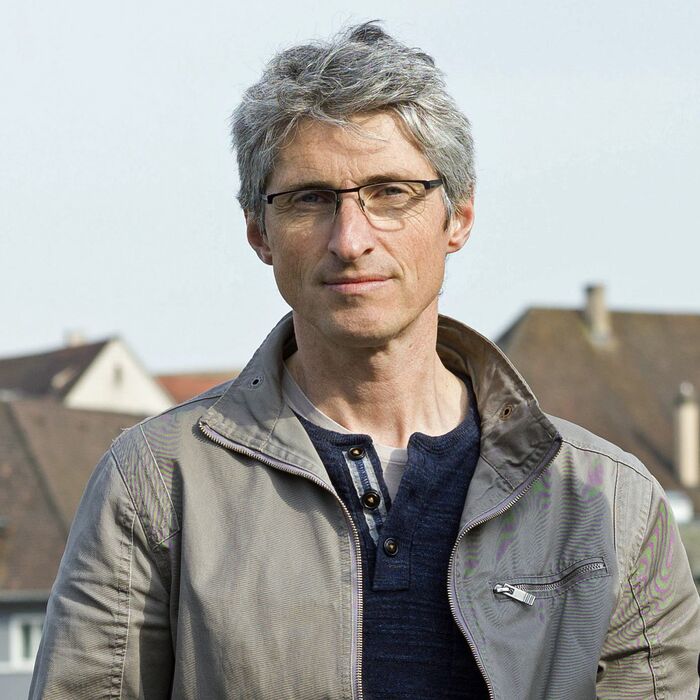
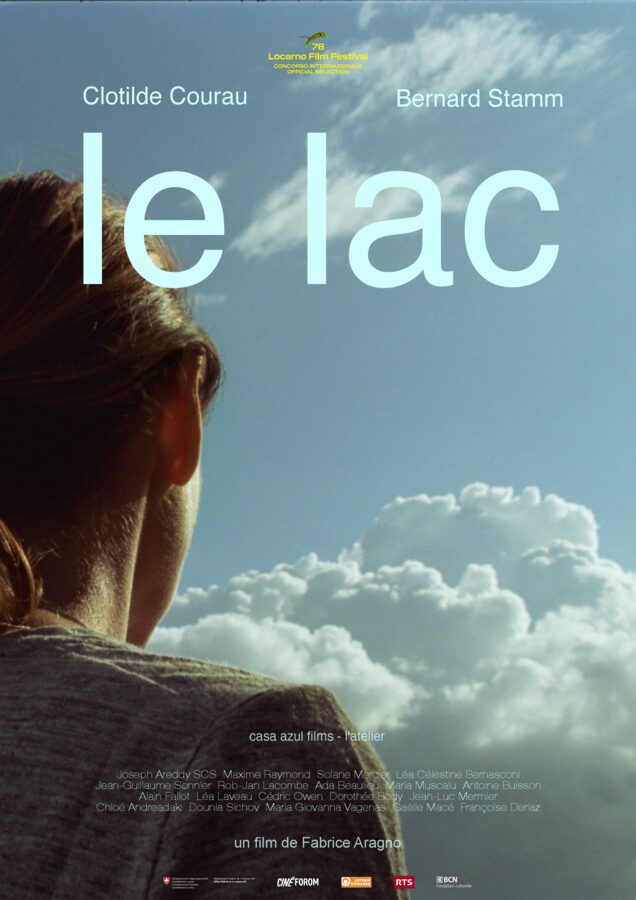
A conversation with Fabrice Aragno on his new film Le Lac (2025), his creative process, and his way of accessing freedom through cinema. The conversation took place over video call on 4 August 2026, between Rio de Janeiro and Fabrice Aragno's home beside the lake of the film — Lake Léman, in Switzerland. Midway through, a storm crossed the lake and entered the interview.
For me it's the opposite of shooting — it's receiving.
I. I don't have an idea. I have feelings.
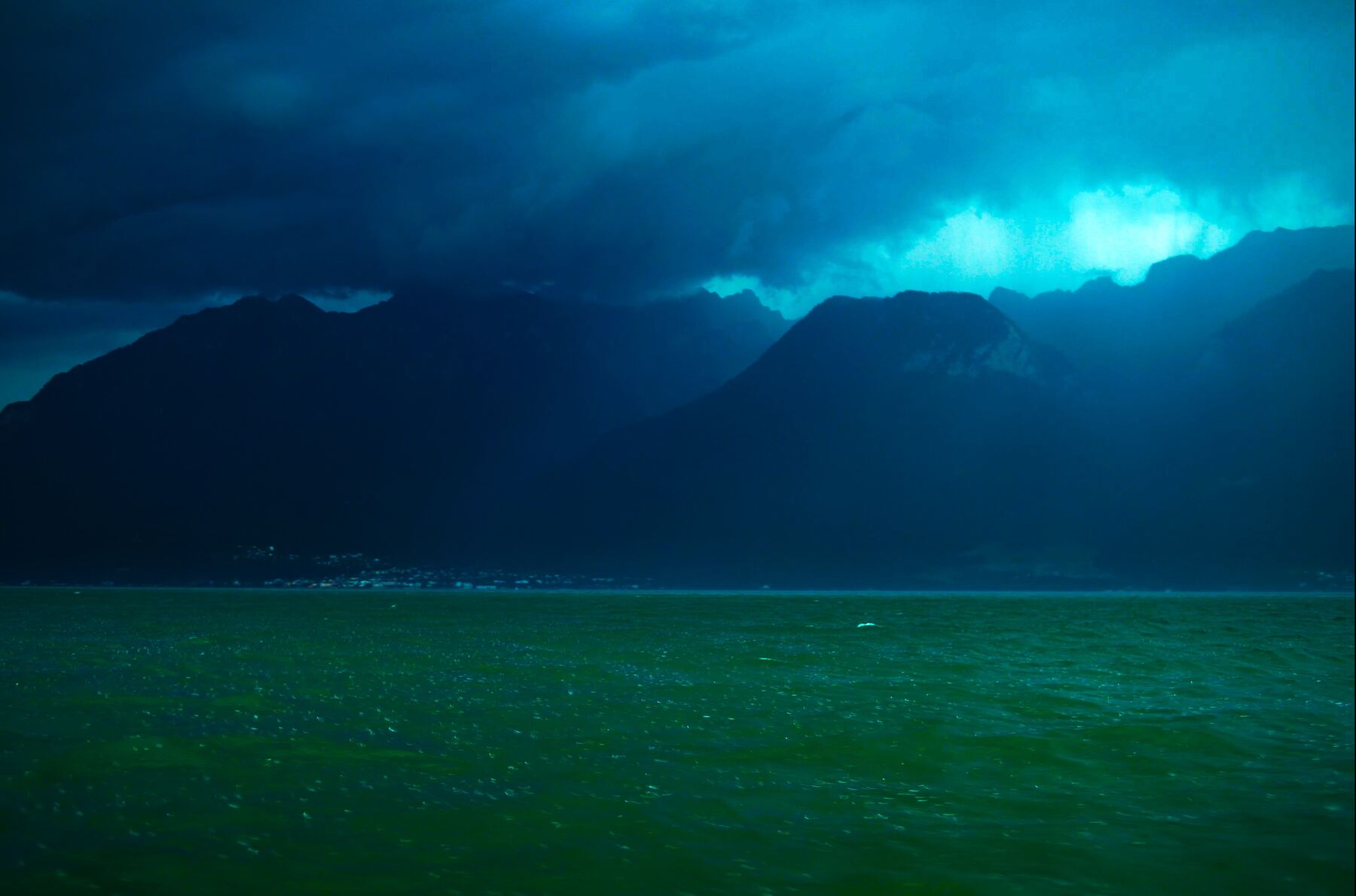
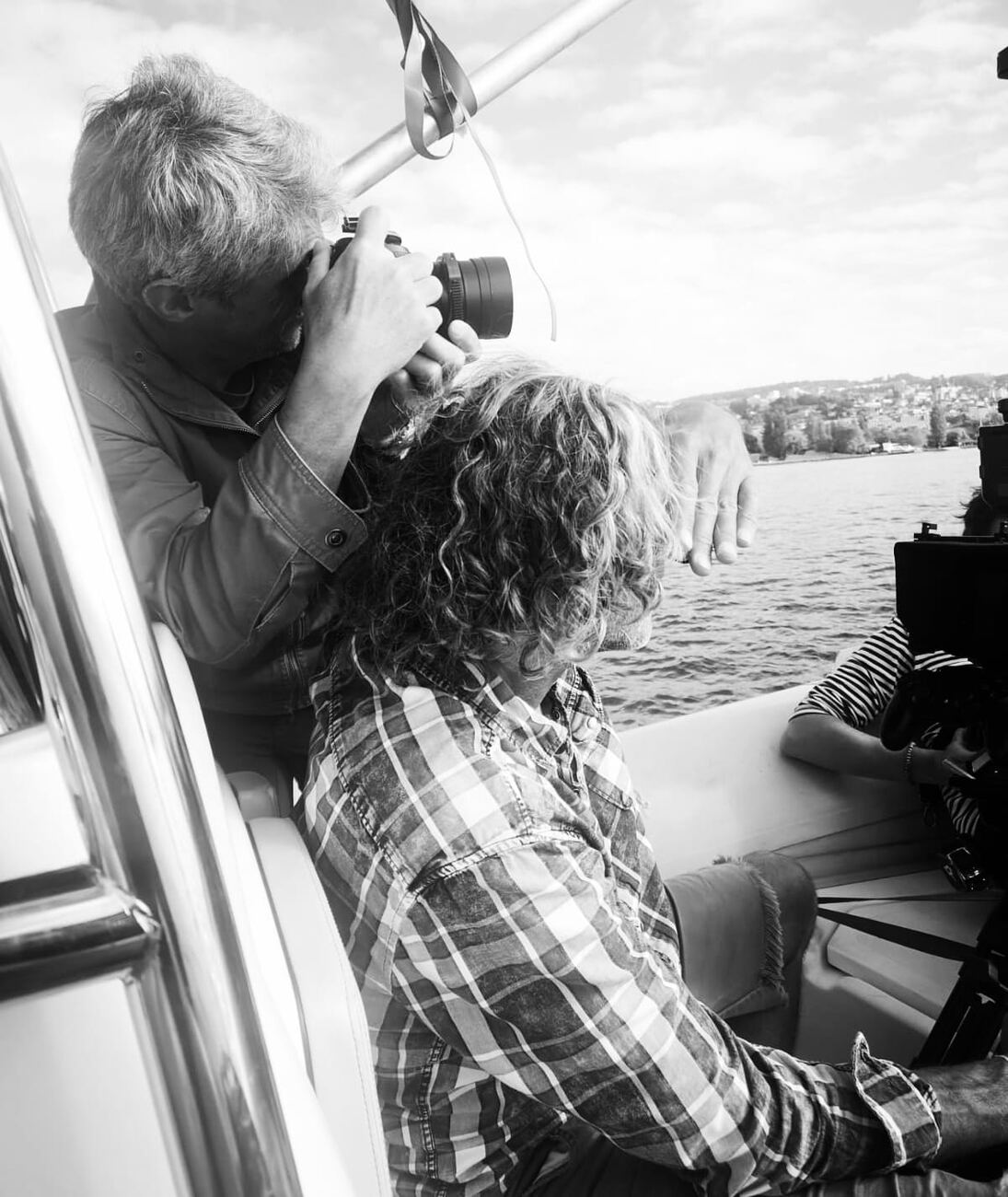
Francisco Vidal — Thank you very much, Fabrice, for this interview. My first question is about the surface. One of the ways I experienced Le Lac was as if I was watching a chromatic visual score — a composition of images written in color, even though they are filmed images. What's impressive in the film is that it doesn't have one fixed tonality or palette. It begins with the hand emerging from blue-black darkness, and it passes through amber light, the greens of the forest, Bernard's body dwelling inside milky green water — and the skies of the film are not only daylight but violet, amber, copper, the whiteness of the fog. A film composed of various textures of color.
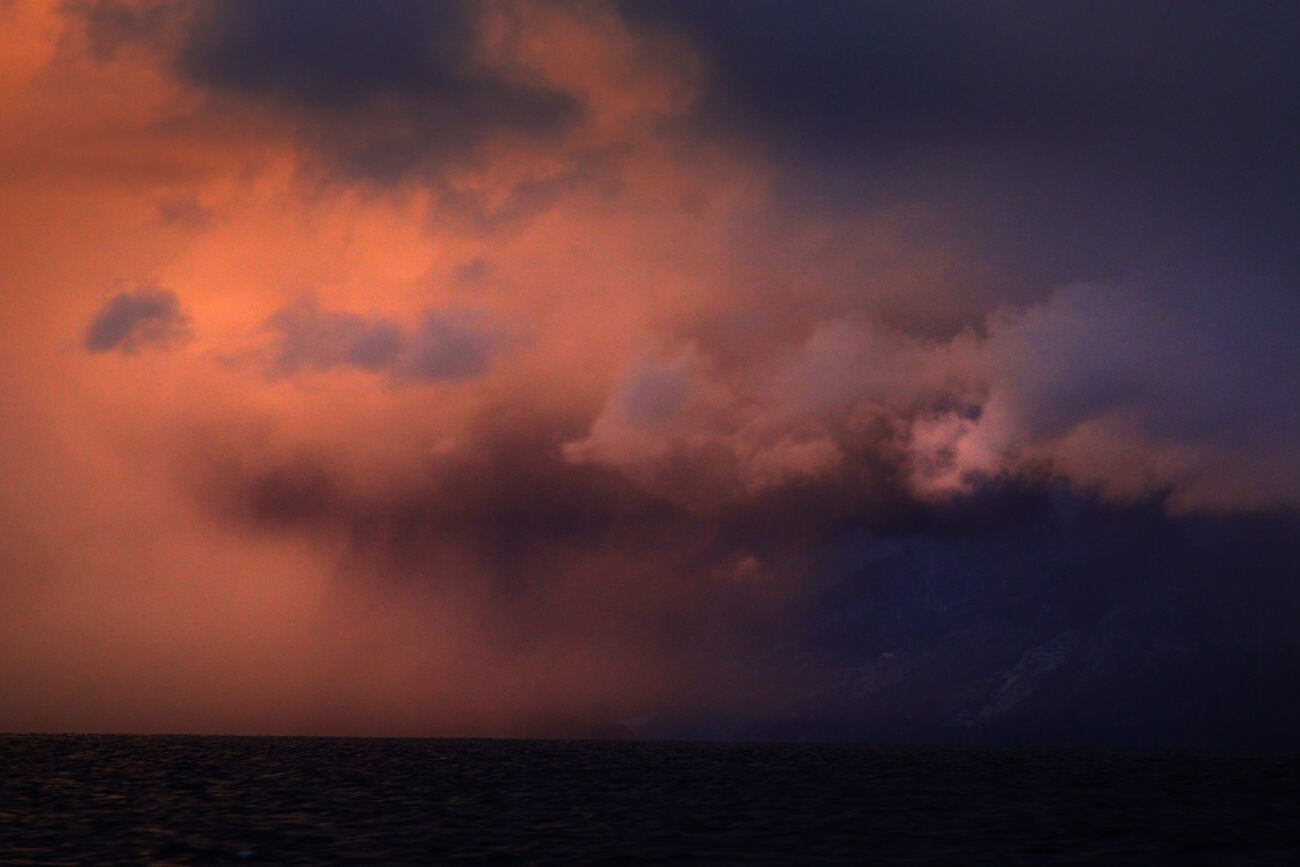
So my question is: as a filmmaker and an image maker, how did you compose the film's movement and rhythm through color? Was the visual texture of Le Lac decided before the shooting, or did it emerge in the act of filming — in the encounter with the lake and its light?
Fabrice Aragno — I will say that you use the word shooting, as English or most Americans say — in the act of filming, they say shooting. And for me it's the opposite of shooting. It's receiving. When you shoot, shooting is going from the camera — we shoot to a character, we shoot like a bullet. And me, not. I receive. In fact the camera, the lens, the digital camera or the analog camera receives the light. The light goes through from the outside, comes inside in this invisible darkness, and then exposes all the argentic, all the sensor, and transforms in signal. So it's receiving.
And with this film — I have no theory. I don't go forward with a kind of dogma that I want to glue on the real, on the things that I have in front of me. It's natural in me, in my sincerity, in my way of crossing my life until now. I was many years working as a lighting engineer for the theater. My place is in the shadows. I prefer watching the light from the shadows than to be in the light and shooting.
In the beginning of this project — it takes me back a little, ten years ago, a little before. But it's not ten years of work. I was with Godard, I was with many other things, and we were a little working on Le Lac, sometimes every day a little, but not all my time. At the beginning I thought I would need a script with a true story, characters, a big crew, dialogues, a team to shoot the film. And I was losing myself in that. The script — it was working, but it didn't work to get the money.
But in the same time that I was thinking about the film, I was reading. When you make a creation, I think it takes you completely. By chance I was reading Marguerite Duras, the French author, and I said: oh — in Duras, one sentence is so precisely right, it expresses exactly what I wanted to express in one complete scene. So I take this sentence of Duras and I put it on the left page of the script, the white page on the left, just to have in mind the taste of what the scene must be. Or I take a piece of a poem, French or Japanese, or text from Virginia Woolf — in The Waves there are many, many things that touch me a lot. And I thought: exactly these words, it's what I want to be in the soul of the scene.
At a certain moment I wasn't in connection with my script anymore. I cancel it. And I use only the notes as a guide to make the film. It's not a theory, once again. It's just a practice.
And with that, we go on filming. And as you go on filming on the lake — for example, now, I don't know if you will see. The lake is just there.
He turns the camera. The lake is in the window.
Francisco — Oh, it's beautiful.
Fabrice — It's the literal lake. And — I don't see, but there is a storm arriving here. Yeah, there is. I can see that big storm. And the lake changes already.
Francisco — I saw the cloud. It seems like a storm is coming.
Fabrice — Now I have to show you a detail of the lake — there is always the wind coming from there, and all the waves on the lake make like that. And, well — it's real. For example, in the filming, going on the lake, you cannot modify the lake. The lake gives — the nature gives his own point. And it was quite playful and wonderful to do it, because going on filming without a script, just with some desire, you are not putting the pre-concept idea on the real. It's like exactly the storm arriving. You are not gluing on the reality an idea, with dialogues. No, no. We receive things.
And we were clear, with my small crew and with the actors, about what it's about. It's about life. It's about death. Letting something go away because something died — it could be love, it could be life. It could already be dead. You can also watch the film as if it doesn't exist anymore. Maybe there is something between the two that died — the young thing that died, the child. But the film is not at that point. It's about the emptiness, the void, and what we do with the void.
So we knew, we felt exactly what we wanted, and it was to go to the lake and receive things with the actors, and improvise. Because when we wanted to go with sun, we arrived with rain and wind. So we imagine things with rain and wind. And then we are by night, it's very calm, there's a full moon, and then a small wind comes — and this small wind behind the man's head makes like bubbles of light. It's beautiful. And all these bubbles of light go from him to her. This is not something you can write in a script. But when I see it — it was wonderful. It's like he's communicating something to her, or like his soul is going from him to her. A communion between the two.
But no — I don't have an idea. I have feelings. Many feelings before. And in fact the first step of the filming was: I received money for another script. I made this other script, and I used the money to buy the boat to make this film. I bought the boat very fast and went alone to the lake, just with my camera, just to receive things.
The rain begins to reach the house. On the terrace below the window there is a table he has been building — raw wood, still unfinished against the water. He asks leave to carry it inside.
Fabrice — Hey, brother. Now we don't see any more — the rain arrived. Now we don't see any more.
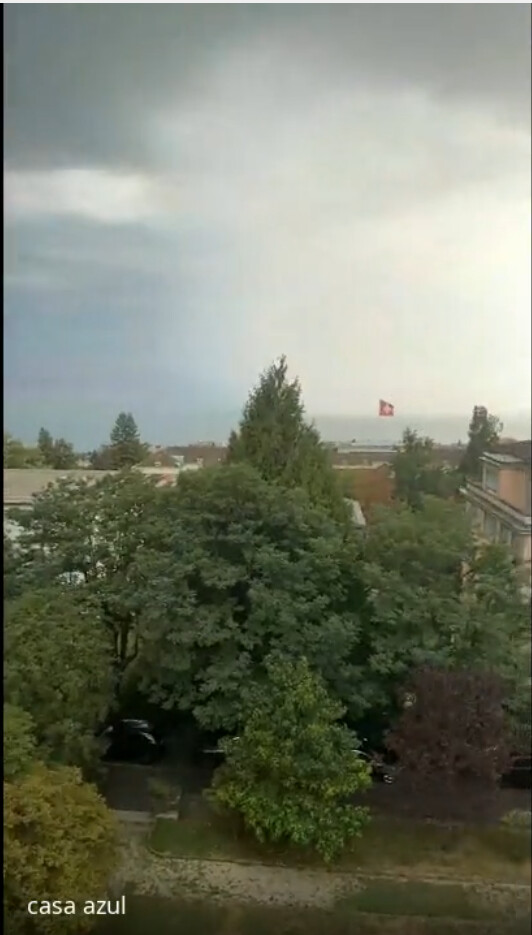
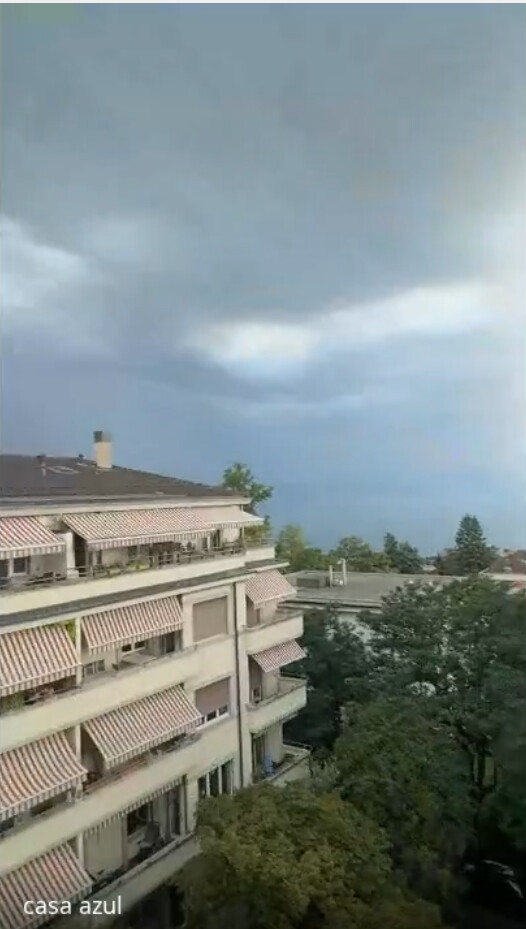
Francisco — Now it's starting to rain. Is it strong?
Fabrice — Not yet, for the moment. But it can be strong. Climate change — the storms are stronger.
Francisco — There's a shot in the film where they are in the bathroom — it's very similar to this.
Fabrice — It's exactly because I was in my kitchen seeing this kind of thing. And I wanted to recreate it in the bathroom.
II. It's not just images — it's just images.
Francisco — That's something amazing about your work — you film things, and then you use them. Are there tests that you did that are in the film? Things you didn't plan to be in the film, but are in the film?
Fabrice — No — yes — no. In fact, I don't have any difference between tests or shooting or filming. It's images. And yes — Jean-Luc would say: it's not just images, it's images just. But it's not just images, it's just images. It's a beautiful phrase. They are games of words.
It's not just images — it's just images.
Francisco — I love that you are an artist that is open to the unexpected, because it's very rare. Here we have a culture where everything has to be pre-planned.
Fabrice — Even with the digital. For example, in the moment when there is a kind of steamboat, and they're going near the steamboat, and then you slow down — all this slow-down, I do it manually, with a jog wheel. Moving the image manually, like if I were on a tape deck, or on a vinyl disc, by hand. And I record the output of the computer. Because I could do it in digital — but you have to think before, ask the machine, the machine renders, and then you have the result. And I didn't want this. I want to have the direct.
Francisco — You lose the sense of touch also.
Fabrice — Yeah, yeah.
III. I have a memory of images, of light.
Francisco — There is something beautiful in the way you film them outside of the boat as well — the landscapes as characters, the bodies as characters. The contrast between the handheld camera, which feels like a living organism inside the boat, and then the scenes where Bernard and Clotilde are lying in the garden, playing with a ball that could be a child, could be a stranger. And afterwards this beautiful jump cut — she is in the bed and Bernard is far behind. You just said you don't have preconceived ideas, you have feelings. But how do you compose something that feels very meticulous, but also very alive?
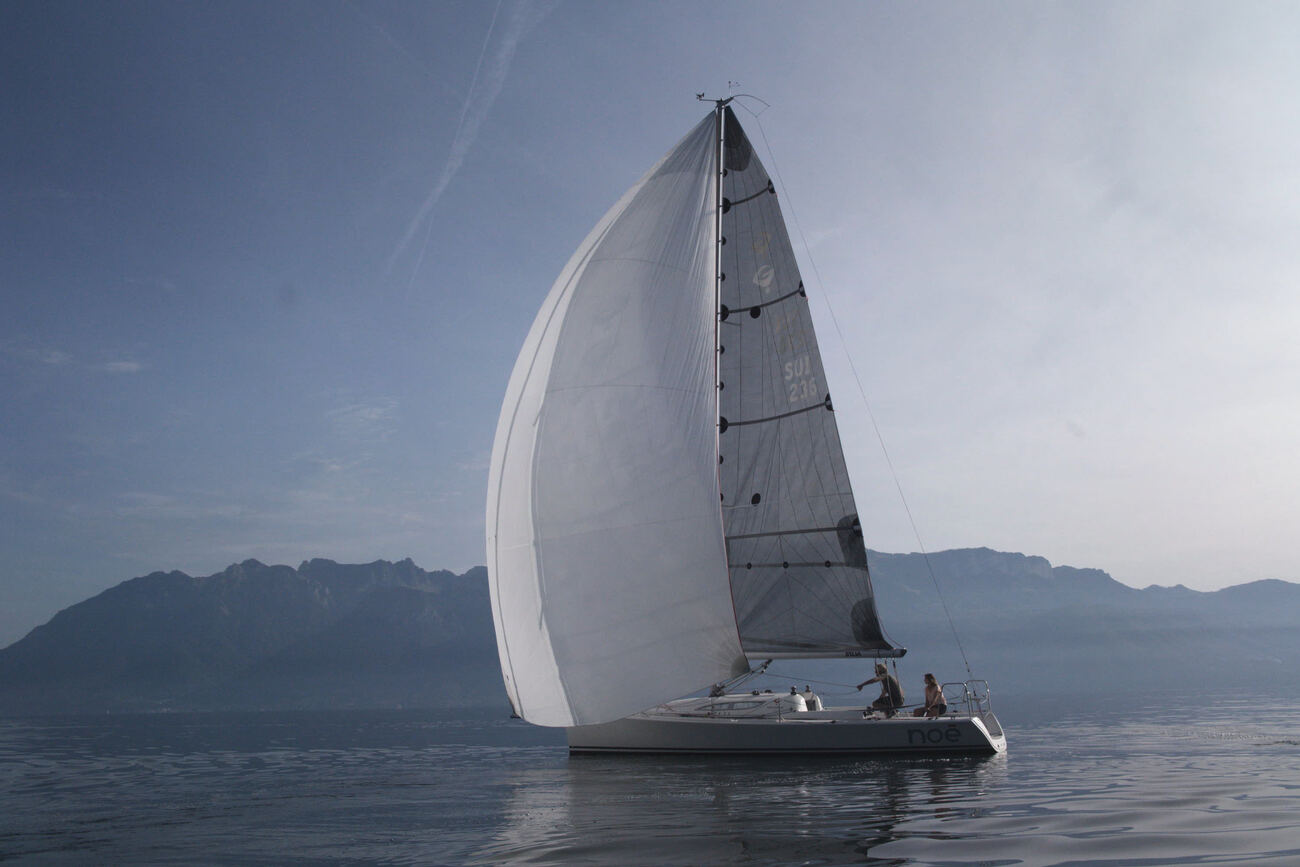
Fabrice — In fact, all the truth was: I filmed alone around six, eight years on the boat. Then with the actors I began in September 2023, on the lake here in Switzerland. With those images I tried to find the rest of the money for making the film. We found it. And in September the year after, in '24, we went to the west of France, the northwest, where Bernard is living — near Brest, in Bretagne. With the idea of filming the beginning of the film, which was still an idea outside of the script: the arriving of a world sail race, where Bernard will arrive, she will meet him, and they decide to go make the race on the lake.
But without a very precise idea of how, what. There was a scene in a hotel room that we made — this was kind of pre-concept, somehow. And at the end it's not in the film, because it wasn't interesting. The other kind of practice is more interesting. But we wanted to have maybe some joyful moments and some painful moments, like that, in my fridge of material for the film. In my garde-manger — where you have your things to eat, for preparing your meal.
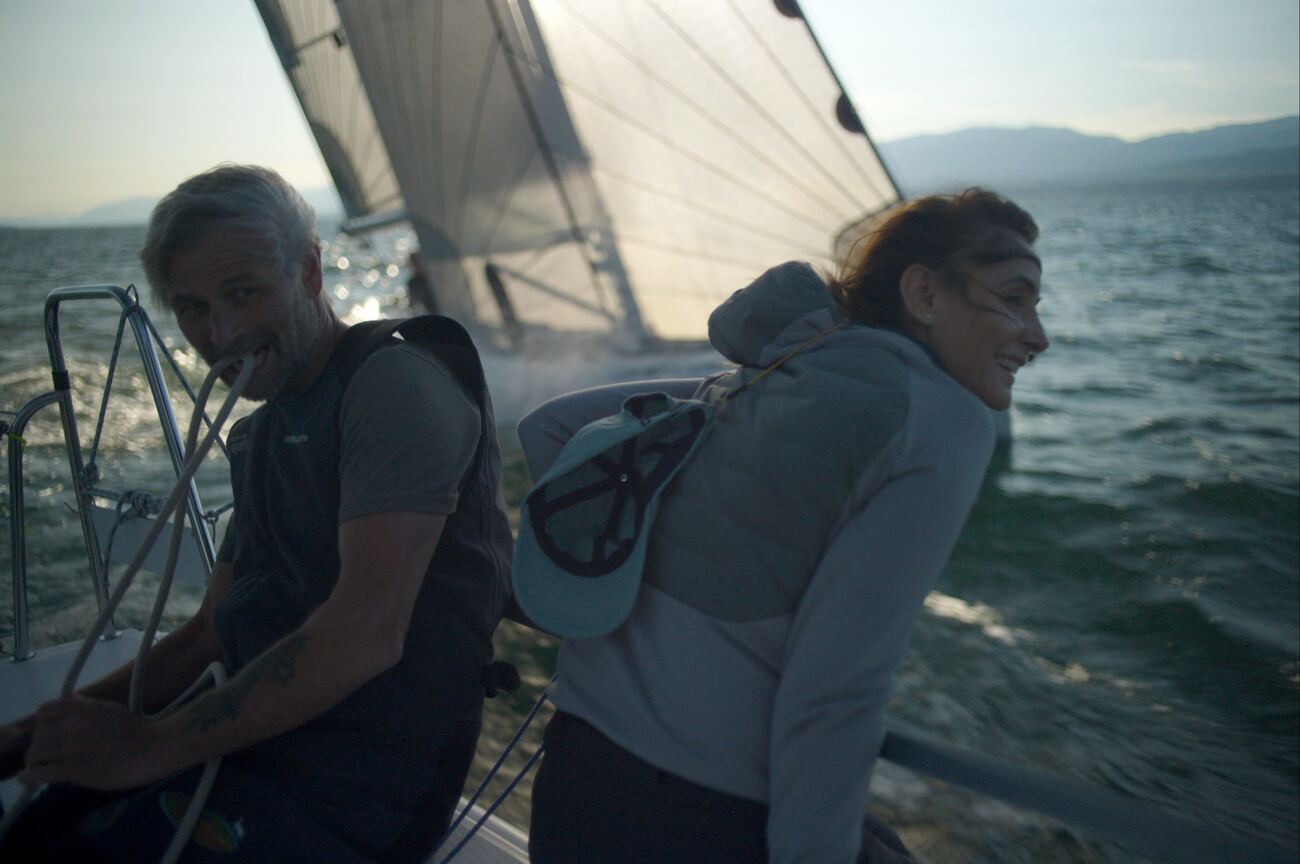
And we went to the house of Bernard, who wasn't living in Brest, in the city, but in the country. The day before the filming we were there, and we see the garden. And we say: wow, it can be nice, the garden. Maybe we can make something here. It was not very nice weather — rainy, gray. We said, we'll see tomorrow. Maybe we can make a play with a ball.
And then we watch inside the house, looking a long time — what can we do? And on the first floor there were these two rooms, and in the middle, the steps, the corridor. And it's very interesting: if you are in one, you have three spaces. The room where you are, the door, the middle, and the third place. We can play with the light.
And it makes me — because if I have preconcepts, it's only that I have in my mind some paintings. I don't have a big memory of faces, or of text. But I have a memory of images, of light. I don't remember maybe people, but I remember exactly the light that was around that people sometimes. I remember that I talked with him — we were in a bar, with the light like that, and like that, and we talked — but I don't remember his face. This kind of disease I have. But I remember images.
And this corridor makes me thinking in a painting of Félix Vallotton. A Swiss painter who paints this kind of corridor, with a character in the middle, a little hanging on the door. Wow — it's like Vallotton. OK. Tomorrow we will make something here.
And in the garden, I was thinking about also a Vallotton painting, another Vallotton called La Balle — where you are up, and you see a garden, the shadow of a tree, a child running after a ball, and two people in the back. And when I see the garden, I see the two houses in the back. And when we come back on the day of the filming, we just brought a red balloon to play with. I didn't know what to do with it. The actors were watching me — what can we do? I don't know. We can do something joyful. Maybe we can play with this ball. OK: you, Clotilde, you play. Then you, Bernard, you play.
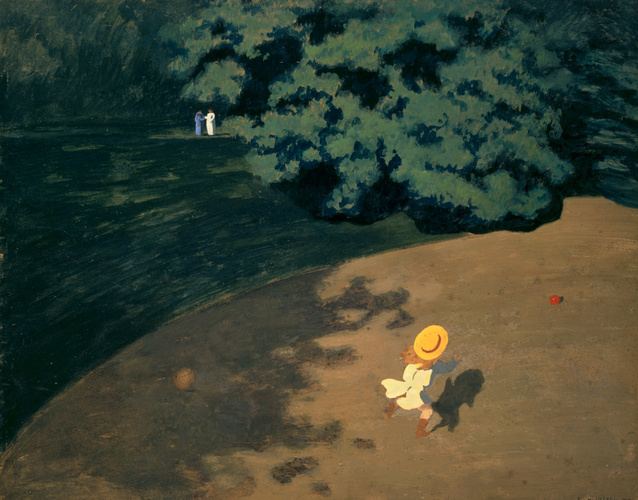
And because it was the day after the rain, there was wind, and sun and clouds, sun and clouds. So the shadow of the tree on the green was like a hand. When there is sun, it's like a hand on the green. And when the clouds come, it's gray, the shadow disappears. And then again. And I love this. It makes me think of this painting of Vallotton. And so it was simple to do.
So we make this in digital. Then we redo it now in 35 — because we film a little in argentic also. And with the proposal of my DOP we make some close-ups. And with Clotilde, that she sees herself watching the camera — it was made on the day. In fact, the two are made on the day. In the corridor, by night — it was a long scene, and then I cut inside, a kind of jump cut. For me it's not a problem. Godard makes jump cuts — no, today everyone makes it, it's nothing. But it was playful to play with a fixed camera, and then you move inside. There is the same thing a little in the beginning, inside the boat, when they are preparing the boat — he's down, they are both down, they are both up, this kind of play. I wanted to try.
Francisco — I really like it, because the feeling of time and duration gives propulsion to the film.
Fabrice — The preparation was that it reminds me some painting. And maybe when I film — unconsciously — when you are making things that you don't think about —
Francisco — You're making something almost unconsciously, in the moment.
Fabrice — You are not thinking exactly something, but you are doing it. Unconsciously, yes. I don't know how to say it in English. Well — filming on the lake, you are completely in the painting. And in fact it was a desire. Because at the beginning, the first idea of why going on the lake was because I worked on an exhibition — a painting exhibition. And the subject of this exhibition was the lake. All the big grandmasters who paint the lake. Even Dürer — the Melencolia is on the lake — Courbet, Hodler, the Swiss.
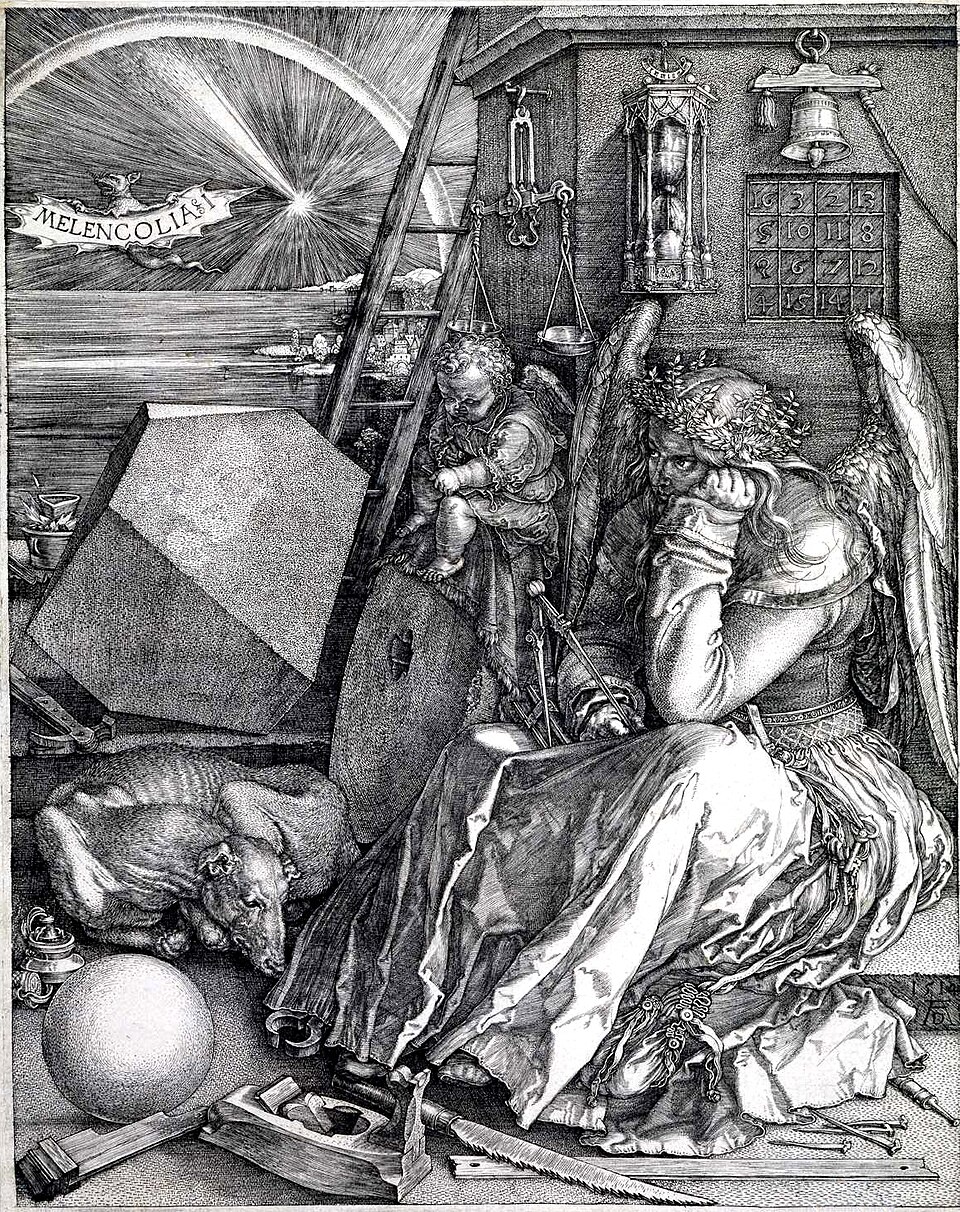
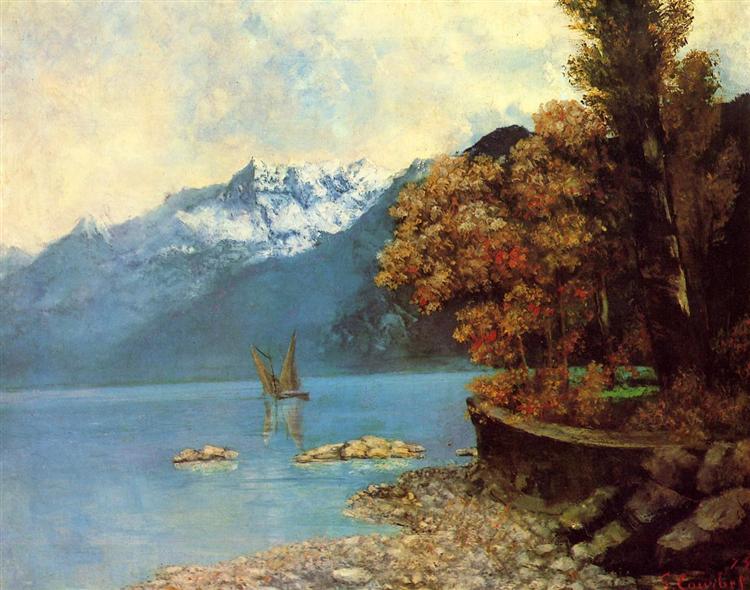
I wanted to go put my camera in the middle of the painting. A child who loves to eat cakes — what's the name for a child who loves to eat cakes? A gourmand, we say. Someone who loves to eat things, to feel things. Me, as a gourmand of the image, I say: I want to go in the middle of the lake, because I will have a lot of pleasure making images there. Because of the color. The variation.
IV. This train is not just a train.
Francisco — One of the most beautiful things of the film is that it requires an immersion — it feels like a world. And some of the most beautiful passages are the detours the film takes. There is a young couple at the shore; there is a close-up of a woman dancing by the fire. How did that come to be in the montage? And this is the first time, if I'm not incorrect, that you work with Chloé — Chloé Andreadakis. How did you prepare the rhythm of the film around these images that are so in the moment?
Fabrice — With feelings. It's not mathematics. With Chloé — what was great: at the beginning I asked her to be assistant in the edit. And finally we made the film together. Because when you are making a film, you are alone. Even if you do it with a very nice crew, very nice actors — at the end, you are alone. By night, you are alone. After the filming, you have your images, you are alone. And with Chloé, suddenly I wasn't. We were two. We see the images together, we discuss together, we try things together. So we edit together. And I think it's important that she signs the edit. Even if I put my hand on it.
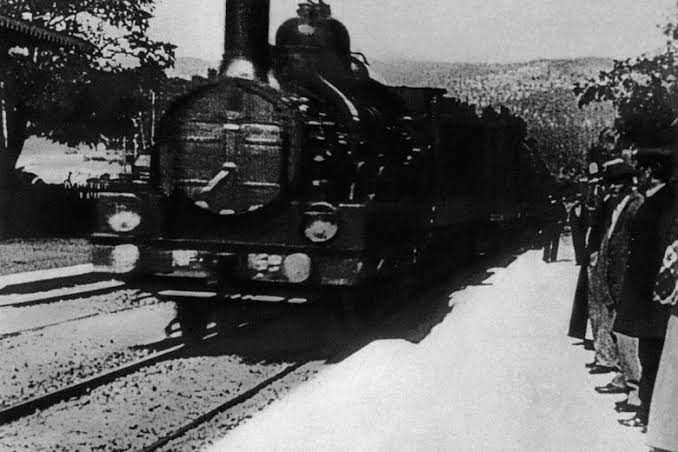
And the edit was made like that. It was about rhythm. The dance with the little fire — that wasn't seen on the lake before. All the other things are things that I filmed directly. For example, the young woman with a white dress who goes down to the water, where there are plenty of young people. And then there is a train passing. That was a gift. I was just there with my boat and I filmed this. And I said: wow, it's just splendid, because it's the paradise of the life. All these young people just living, quietly. It's like a paradise. And this woman is an angel — not angel, but white dress. (This way, I can tell you a story, maybe in our next interview, about some angels that I see somehow around. Connected with Godard.)
And this woman arrived suddenly. I was not prepared. I was passing with my boat. And then the train — the danger is not far away from them. They are in the paradise, but the danger is not far away. Something heavy, something noisy. Something that could take them — a cancer, an accident, a disease, a war, anything. Like in Switzerland, we had a very horrible fire in a nightclub, just at the new year — fifty young people died in this fire. Well: this train is not just a train. It's all that can arrive in the life. Now they're just in the paradise. She goes to the water naked, and just the feeling of the fresh water on the body, and just the pleasure of life. This was in front of me. It was clear that it would be in the film.
This train is not just a train. It's all that can arrive in the life.
Francisco — And the father with his little child — how did you find that?
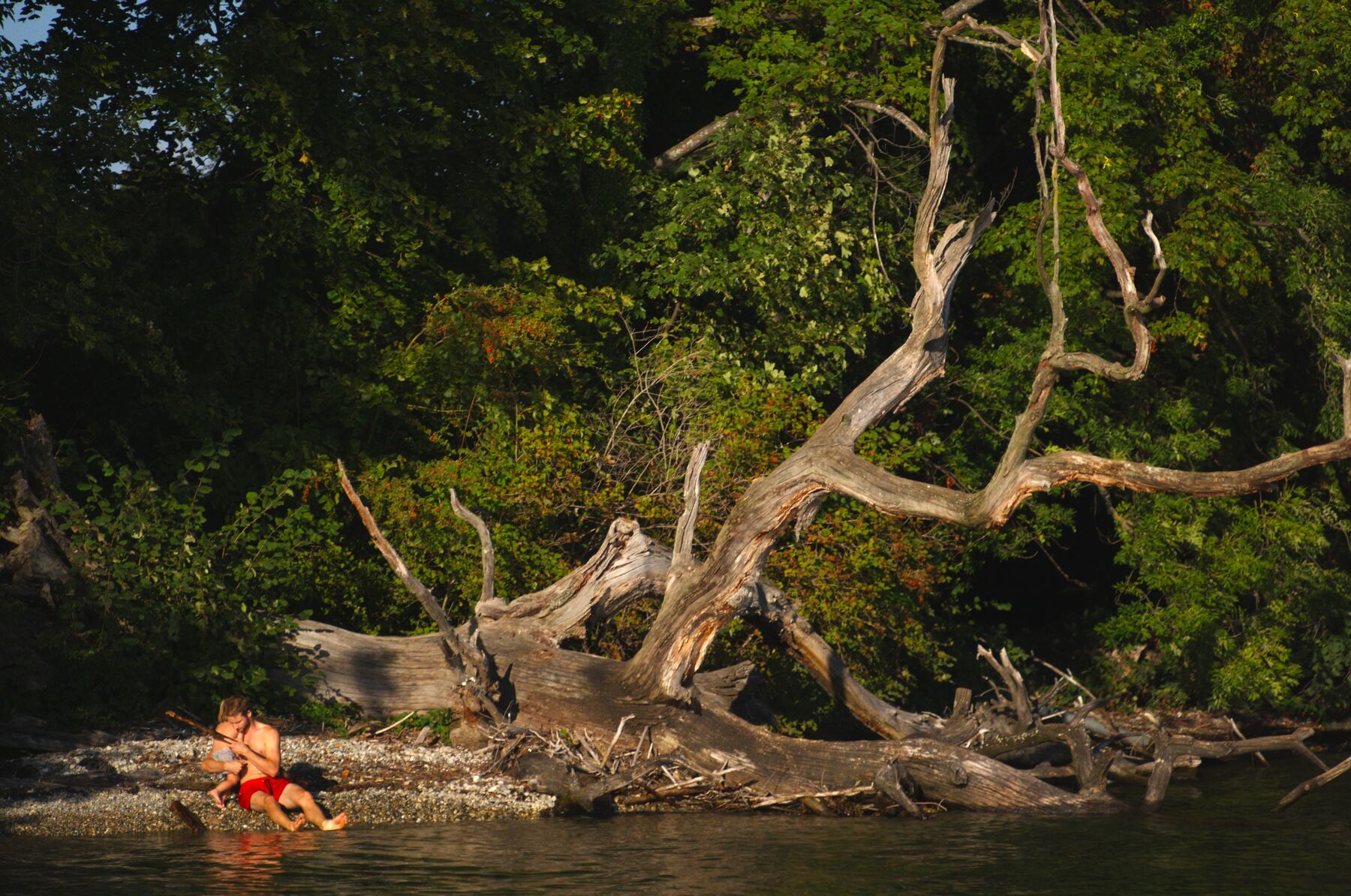
Fabrice — I was with my boat, with the camera, but I was not prepared to film well. I went around near this dead tree — like the hand again — at the end of a garden.
Francisco — It's very beautiful, the tree. It's almost like a structure that is unfinished.
Fabrice — Yes. And I was passing with my boat and I see a father playing with his child, his baby. And the baby was laughing, and the father also. It's just the noise of the love of the baby — very clear, high sound. And the hand of the death on the dead tree. So it was for me like a haiku, like a complete Japanese poem. I had the two things: le bonheur — the happiness — and the ephemeral. I was passing with the boat, it was short. And I was so moved by this that I redid it, with a friend and his child. We remade it at the same place, on the same tree — the scene that I saw.
Francisco — And the party at the water — the fire.
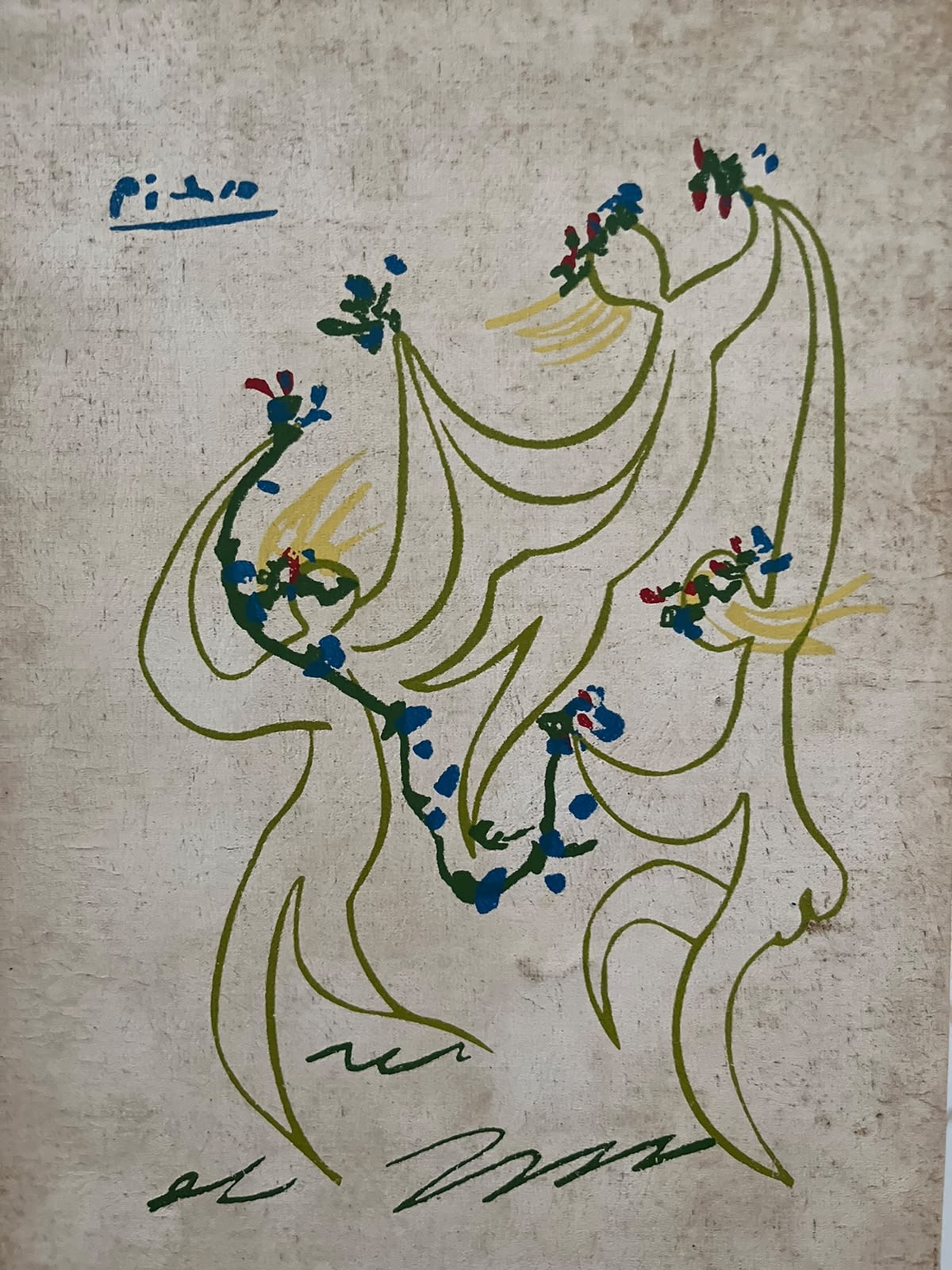
Fabrice — It's an homage. A tribute to L'Aurore — Sunrise, from Murnau. There is a moment after the city in Sunrise, when their love story is repaired and they come back taking the boat. And before the storm, they just cross a party on the shore, with a big fire. People are happy, they say hello. It's like a wedding. Just a moment of the happiness. So I wanted to make a tribute to this moment of happiness. We redid it as a projection of their mind — of my couple in the film. And the dance arrived like that. And it's a sarabande. It wasn't calculated, but it arrived like that. My cousin, who is very literate, told me: yes, the sarabande — this kind of dance where everyone takes by hand — it's the dance that reunites all. The rich, the poor, the man, the woman, the children, the death, the life.
Francisco — All classes.
Fabrice — It's a dance of reconnecting everything. So it was wonderful. And when we filmed it, it grew a little. It's a moment where they are disappearing — their love story is disappearing by going away.
Fabrice — And on this idea of feelings, of things going — I put many signs that maybe only me can understand. But I needed to put them. Because when you do something with sincerity, even if you don't say why, things cross. Emotion crosses.
There is a cloud, by night. A big white cloud, and in the back of this cloud there are many stars. This cloud is like a character — like a face. Two big eyes. In fact, no one knows that. But for me it was important to put it. And because of that — as I talk to you, I can give you this — you know that I was a close collaborator of Jean-Luc Godard. We were together until the last day. During the night of the 12th to the 13th of September 2022 — I don't see him on the 13th. I say goodbye, or farewell, on the 12th. But during the night, I could not sleep. You know that he died with a self death. It was decided that it would be the 13th of September, at ten in the morning. That was the rendezvous with the death.
The night before, I could not sleep. And in fact, I was at the same place —
He opens the window again. The rain has softened. Below it, the balcony.
Fabrice — You see? I was just there. On my balcony. And I was with my camera — because when I don't know what to do, I use my camera as a way of giving concrete on feelings. You feel something, and it makes the things concrete.
Outside, the rain falls crossed with sun.
Francisco — It's beautiful. It's golden, almost.
Fabrice — Yes. And on the side, the rain. — Well, I was on my balcony, and I was filming the sky. And then arrived these clouds on me — like with two eyes. It was like the face of Jean-Luc, or I don't know what. Something strange, like a mask. With small stars in the back, like small eyes in the back. And at the same time, there was the train station — it's not that far away, and we hear the trains. The sound of the train, because of the metal. And I put this at that moment too. Like something is going to disappear.
There's this kind of moment in the film. He is inside — again there's a storm at night, again they have to deal with things. It's hard. He doesn't know how to deal with things. The end of things.
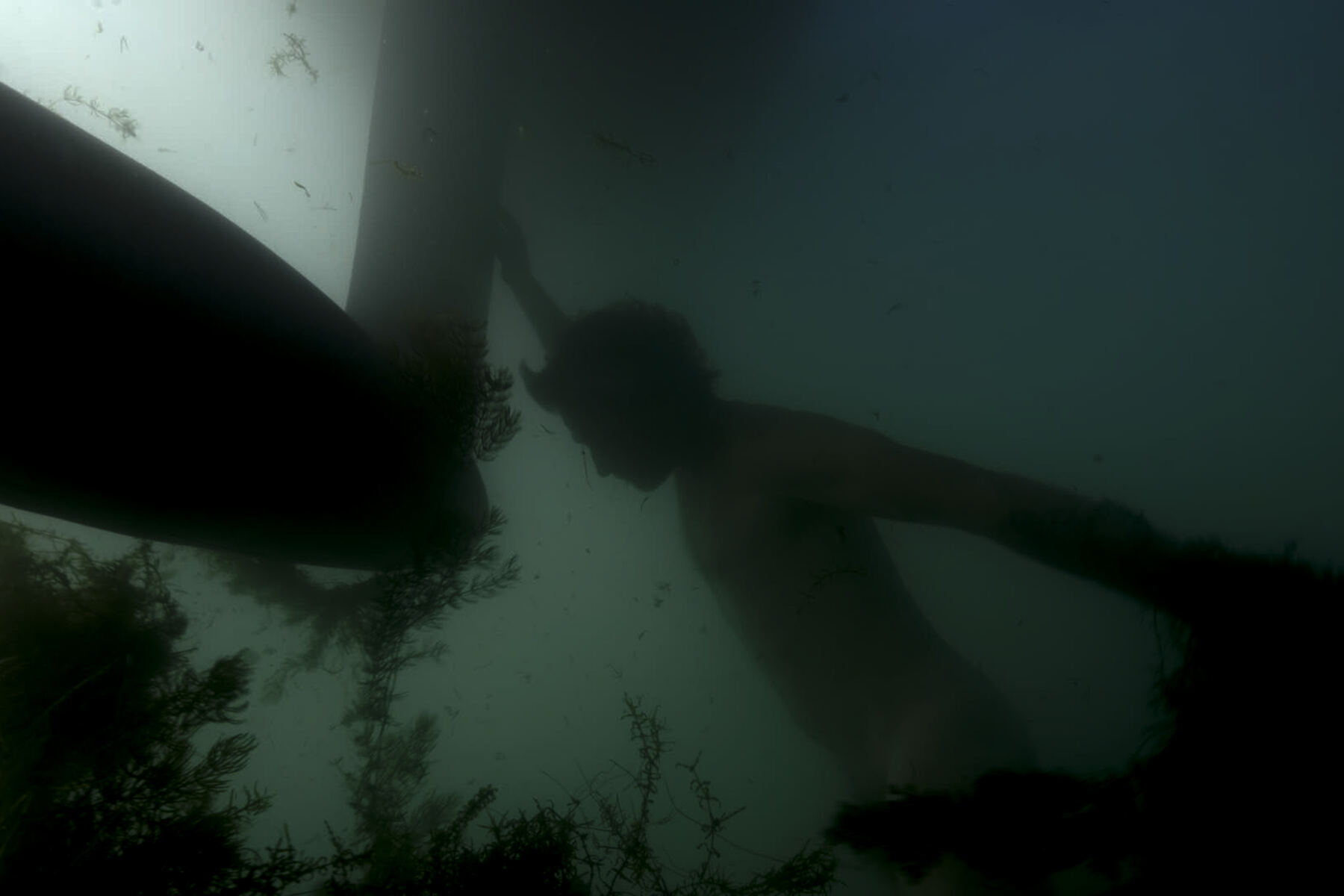
Francisco — I love the scene with Bernard inside the water — it's almost like he wants to go into the deep, but he has to go back.
Fabrice — Their problem is that they cannot talk. They don't know how to go forward. Even the boat stopped. And they want to escape this kind of —
Francisco — Life.
Fabrice — Not life. It's the weight. And even in the darkness, down — still there is this sound again, arriving. Something like calling him. You don't find the quiet down there. And so — down. So you go up.
Francisco — And at the beginning of the film there's a scene where she is in the sun, and she's like this — and he's hearing, I think it's a plane.
Fabrice — Yes. It's a real plane. But it's like something that — you want to let go. And then the silence. After, the silence.
V. She's from the fiction. He's from the documentary.
Francisco — The film really spoke to me about this necessity of being here, now. Of seeing beauty and life in things where you are. And the most moving moments of the film are micro-gestures — close-ups of her in anguish, at sunset, in darkness, without any words; the back of Bernard, which expresses many things. You created the conditions where the invisible becomes visible. And you have an actress, and one that is not an actor. Was that a challenge for you?
Fabrice — At the beginning of the project I encountered Clotilde Courau when I was a jury with her at Locarno Festival, and we really loved the cinema that we were judging together. I asked her if she wanted to work with me. And it was clear that she would work not as an actress, but as a woman. And by chance she's an actress — a very talented actress — with this woman, this body, this moment of her life.
Then I was looking for the man. In the time of the script — classic script, to be shot — people told me: you need an actor at the same level as her, because she's a grand actress. I made some castings. And I was like: if it's a big well-known actor, they will do actor stuff. And you will just see actors, as in three-fourths of films you see actors. OK — it's good for a certain kind of cinema. But if I go in the middle of the lake, it's not to put theater there.
So I continued looking for real men. I said, maybe there is a sailor here in Switzerland. I made a tour of the sailors on the lake — but they are more bourgeois. Maybe some fishermen could be it — a fisherman has this kind of thing in the body, because they go every morning, every time of the day, of the night, of the season, by winter, by summer. They really need the elements. But the sailor, not.
And then, by chance, I see a photo of Bernard Stamm in the newspaper, because he was making a sail race around the world. He is a sailor who makes the round alone — a sailor of the big waves. I don't know how many times he crossed Cape Horn alone. He's one of the craziest sailors on the sea — he made things that people don't understand how he's still alive. And he does it very simply. It's incredible, this man. So I see his photo, I say: oh — maybe him. Someone gives me his number. I call him. He says: oh, why not? It's something that I never did. I'm happy to try things. Why not?
And then we went to him, with Clotilde. We take the train from Paris until Brest. And there was Bernard — a little shy. We went in a bar, a bar-restaurant at the port of Brest, a bar that Bernard knows very well — the bar of the sailors. "Hey, Bernard!" I was with an assistant camera; we filmed this test at two cameras. And we began to imagine a scene — improvisation. I proposed to Clotilde that it could be the last dinner before a long sail race. The last dinner before he goes for six months.
And I know Bernard well now — he made so many sailing races, saying goodbye to his wife, and the wife stays alone on the shore. But he's already away, because he's concentrated on the race — everything must be set on the boat, the mind away. He doesn't have the mind to say those things to his wife. And the wife says: who am I? Am I transparent? And Clotilde — she's such a great actress. She jumped in her character, like that. And she took us — Bernard first, me and my assistant — completely. We were three men in the arms of that incredible woman. And we were guilty — three stupid men, guilty of loving, and not knowing how to deal with our love of a woman, because we love also to make cinema, or to make sailing. We were like three little children. And in the same time, in love with this woman. Complex, complex emotions. And she brought Bernard completely. He was completely in the mood. She drives him.
And then I made some tests with him, to see if he could make a movement. It was wonderful. And then it's wonderful on the lake. The first day of filming with Clotilde, it was weather like today. Rainy, wind. I thought maybe she will refuse to go in the wet and cold. And Bernard was happy to be there, and she was happy. And he takes her into the truth. It's like she's from the fiction. He's from the documentary. And they meet together in the middle of the lake.
It's like she's from the fiction. He's from the documentary. And they meet together in the middle of the lake.
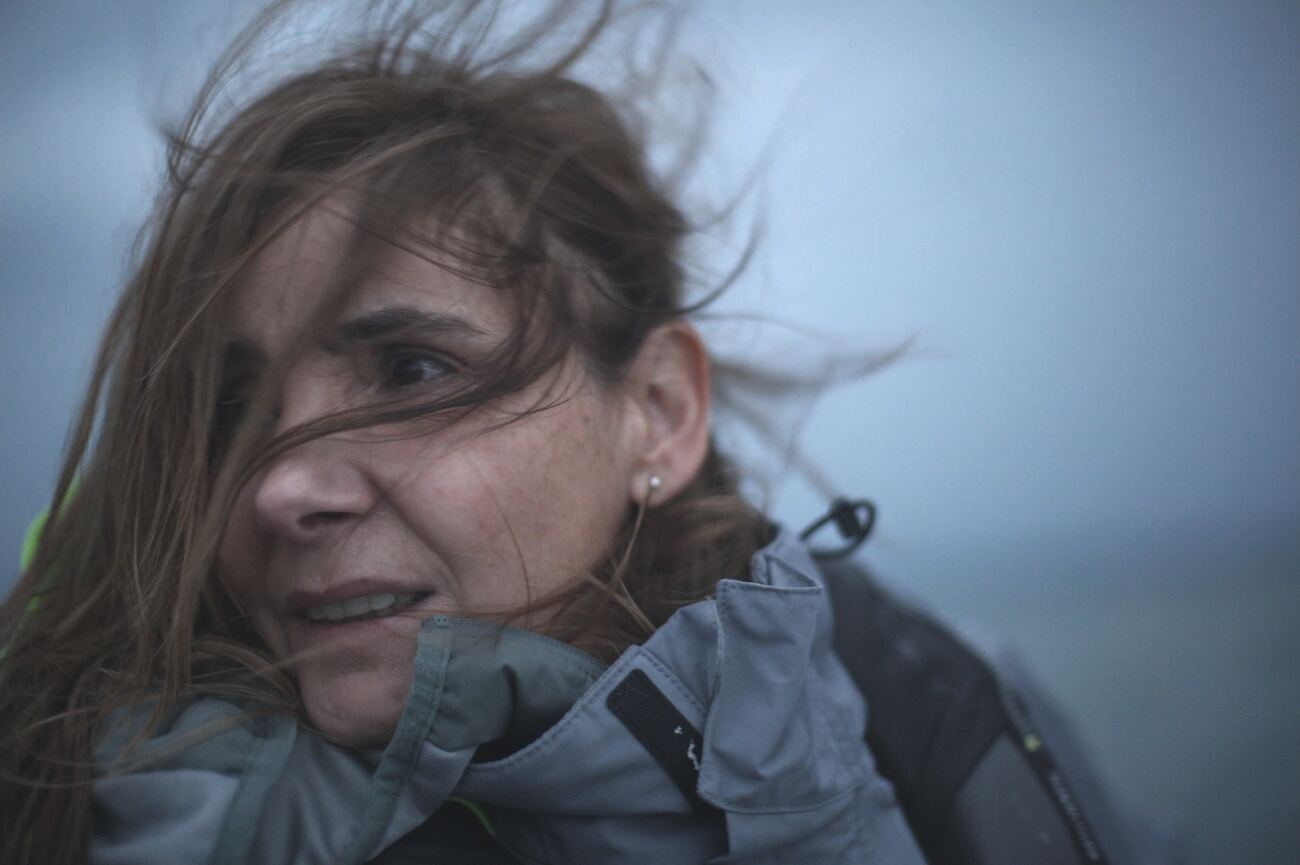
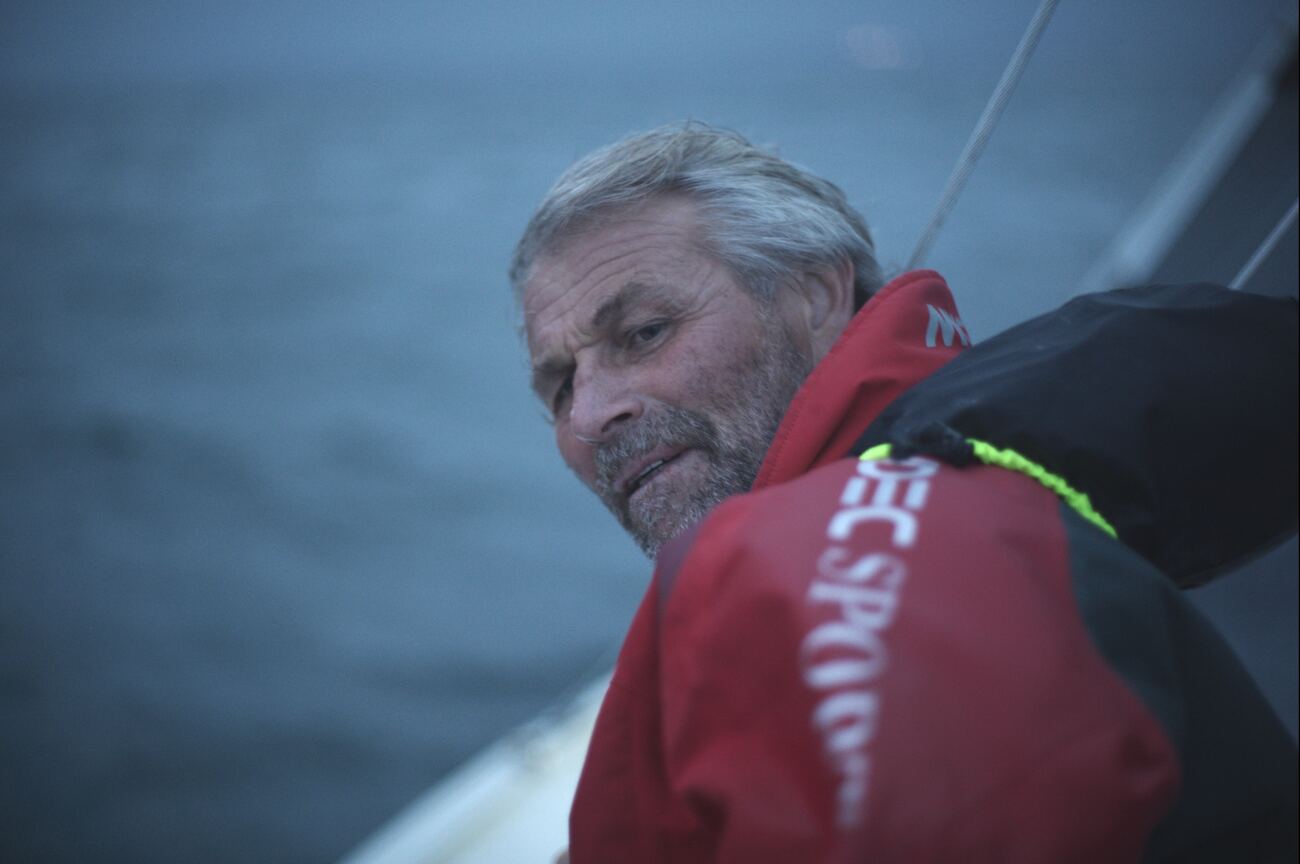
Francisco — And there's a lot of them in black, in darkness. It's very beautiful.
Fabrice — This is completely, completely improvised.
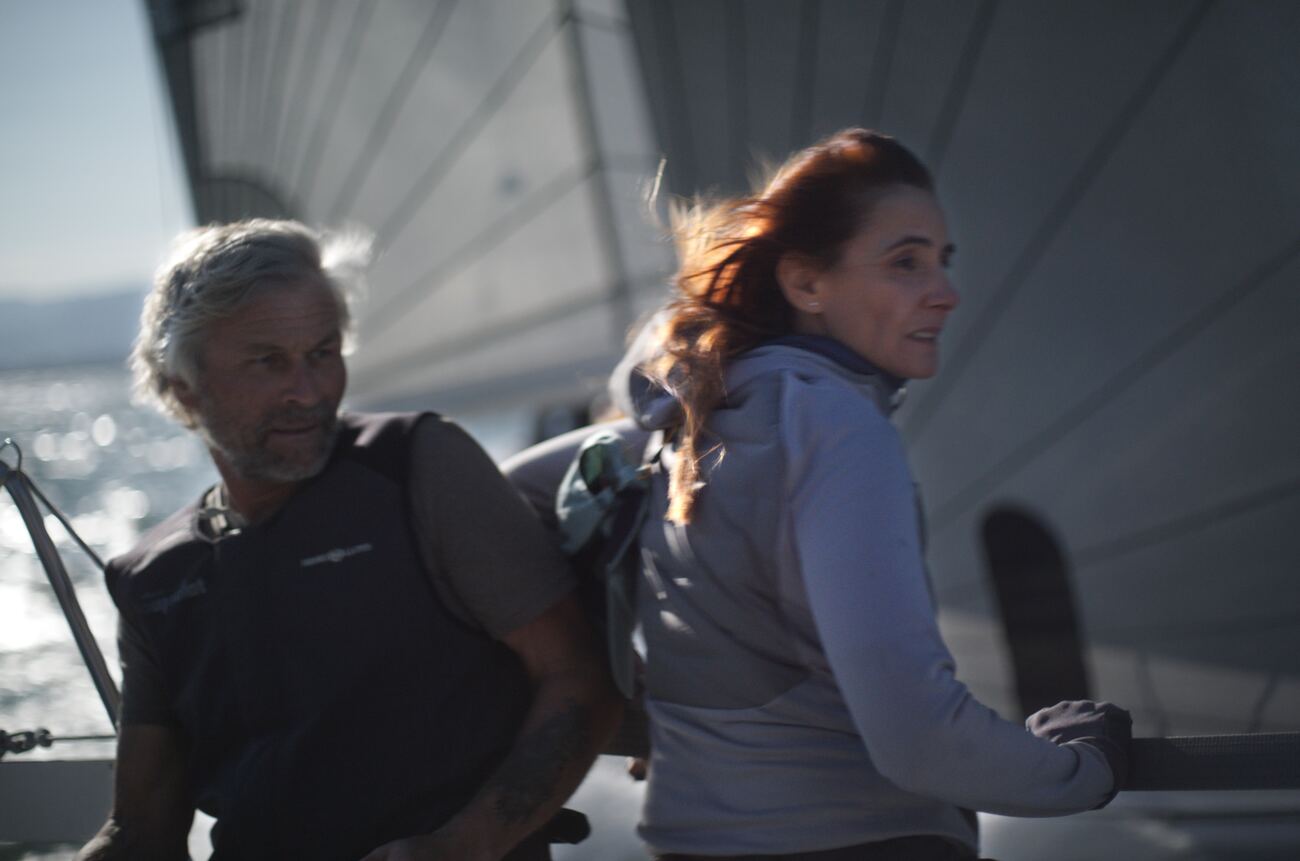
Something that I said: OK, now you stand up, you go behind her. And then — I let it. It's magical. And then you go back — because maybe he isn't present anymore. Maybe he's not there, or maybe he's there without being there. The film is like a variation on a sentiment, on an idea. Like a music, sometimes.
Francisco — Exactly — like a visual score of colors and sounds. I watched the film five times, and it always gave me the same feeling as reading Clarice Lispector. Do you know Clarice Lispector, the writer? There is a book — it's my favorite book. Your film reminded me of her. It's like a stream of love, and trying to gain love.
Fabrice — Send me the name.
Francisco — I will. Água Viva.
VI. Don't change anything to your camera.
Francisco — One thing I want to ask — because you work on feelings, and you don't want preconceptions, you want to be inside the painting: this film was shot with three cameras. Why these cameras? How were they chosen?
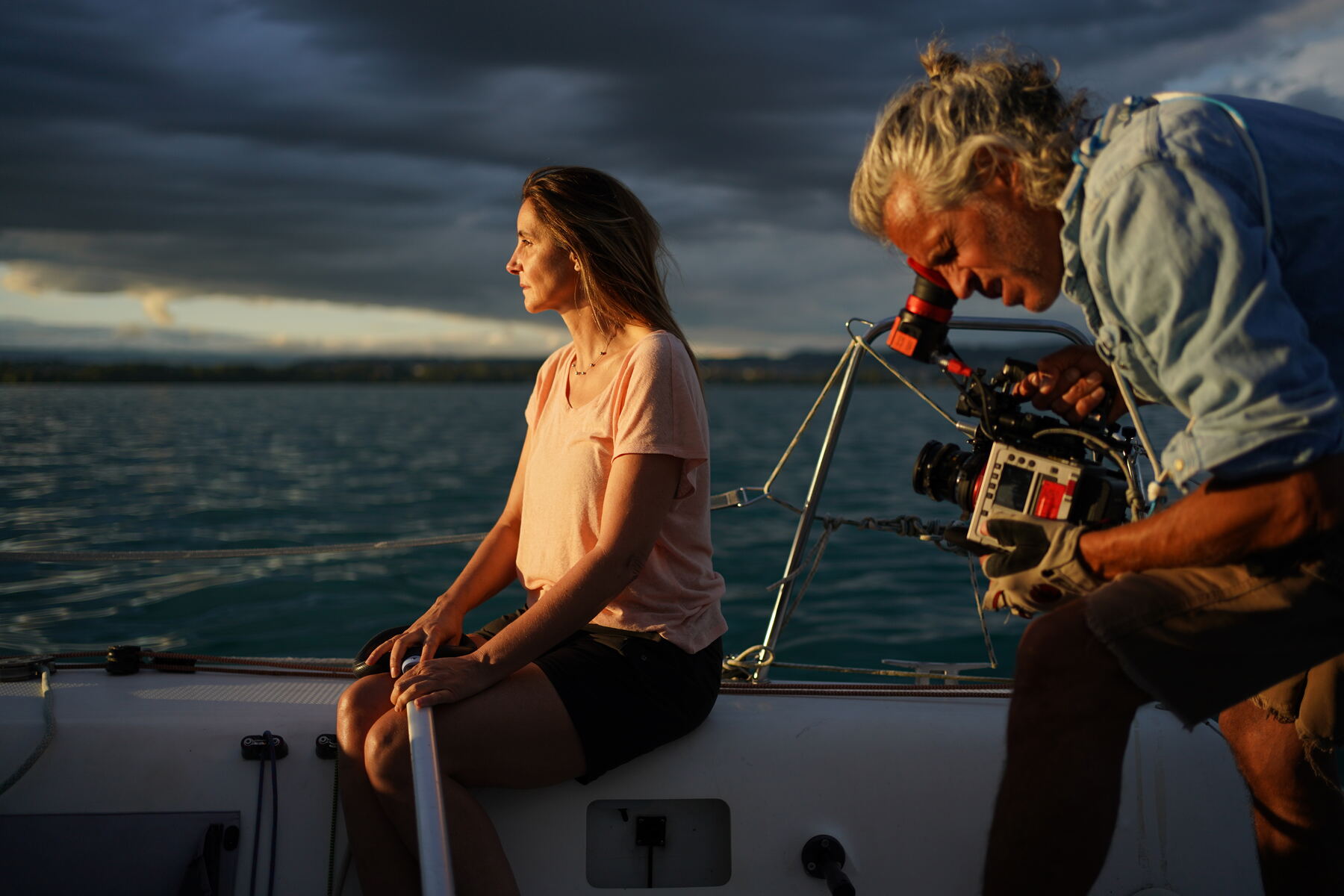
Fabrice — First, I have a camera — it's not the best camera that I have had in my hands, but it's very useful. It's a Sony A7S. A little compact photo camera, but where you can add lenses. And from my childhood I was in love — I always dreamed to have a Leica M6, the Leica of Cartier-Bresson. With the Sony A7S you can add Leica M lenses, because the chamber is very small. And the viewfinder is very clear, sharp. I have white hair already — my eyes don't make the focus very near. But I can put my eye in the viewfinder, and you can film completely inside your image. So it's my camera. And I have already the lenses that I used with Godard — Leica also, but Leica Reflex. All that can enter this camera.
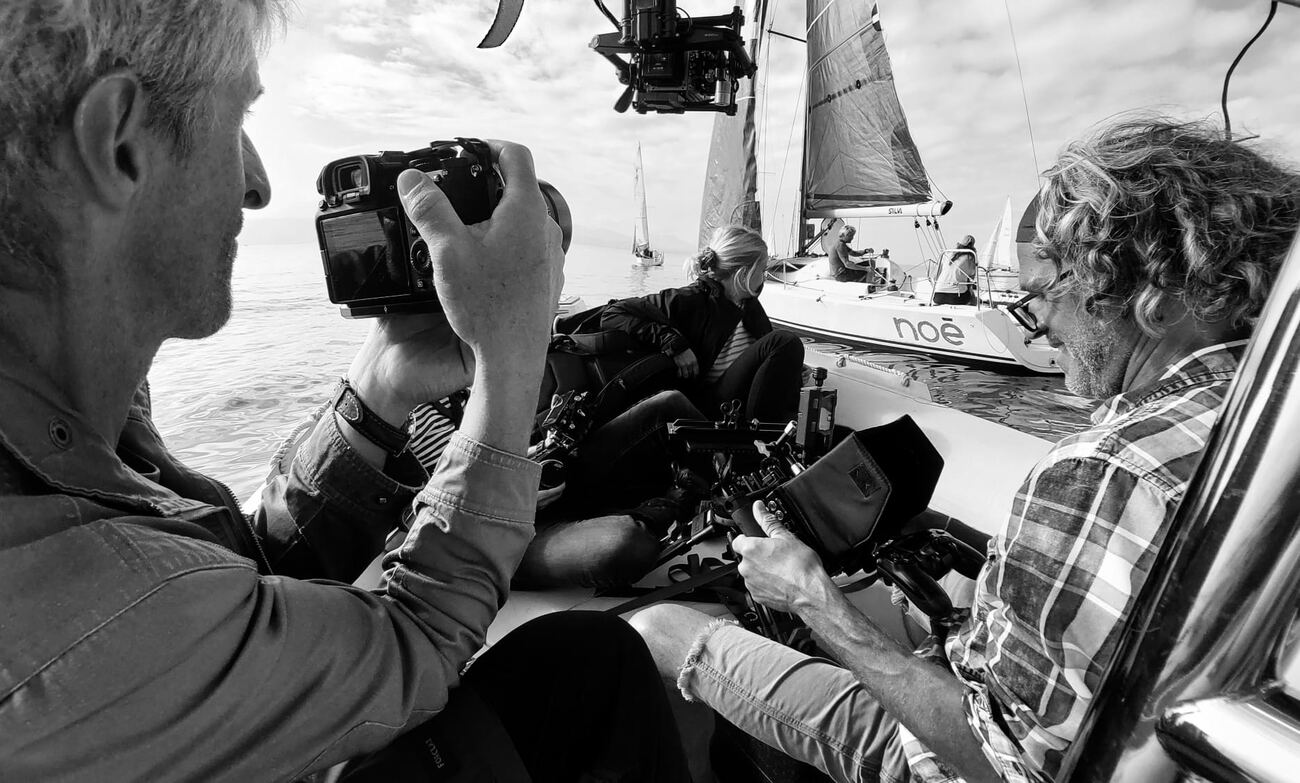
And then I asked Joseph Areddy to join the project. I wanted to work with him because he made a first short film with me — my diploma film, Dimanche — and then he went to Madagascar, and came back. He's very creative, and he's a friend. And also because I was afraid of not being concentrated enough to press the record button, if I'm alone with the actors. Sometimes there are very wonderful things on the lake, and I just — I think that I was recording, but no. This kind of stupid. And also to be concentrated with the actors. So I asked Joseph. And Joseph wanted to use his own camera. He has a Kinefinity. It's a small camera.
His phone. The storm has stopped his daughter's metro between stations. A message arrives; an emergency stop, everyone is fine; she is moving again. The interview breathes; it continues.
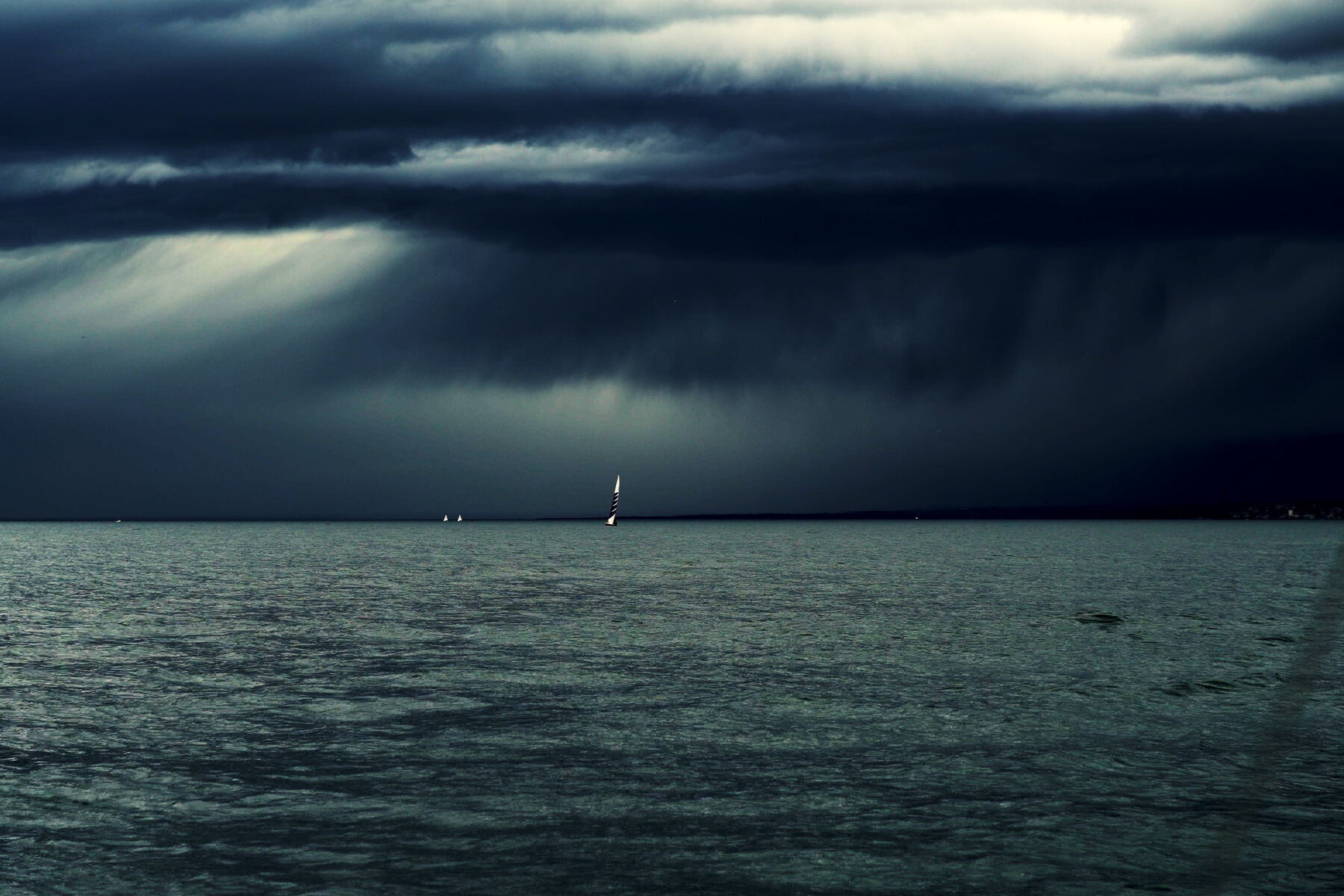
Fabrice — What I was saying — the Kinefinity. Joseph asked me what format we film. And I see the lake. In scope? No scope, no. The lake — you cannot escape from a lake, because there is the around. The only way of escaping is you go down, or you go up. So there is something closed on the horizon, and something vertical. It's like a small cell, almost a bubble.
I didn't know if we do 1.85, 1.66, 16-by-9. But I didn't want to transform the camera. I asked him: what is the format of the sensor of your camera, if you do nothing? What is its original size? And he says: ah — it captures in three-two. 3.2. OK. I see.
And in parallel, I had a painting of Caspar David Friedrich — it's not painted on the lake, but it taught me a lot. I saw it in Berlin, in the museum. This painting is called Mönch am Meer — monk on the sea. You see a small character, the sea, and the horizon is blocked — exactly like here — by the clouds of a storm. But up, just up in the sky, you see there is some light going through. The horizon is blocked, but up — . And Heinrich von Kleist, another German, wrote a text about this painting — it was longer, I just took a little piece. And it was my synopsis of the film, in the beginning. The last script — it was not a script, it was just notes.
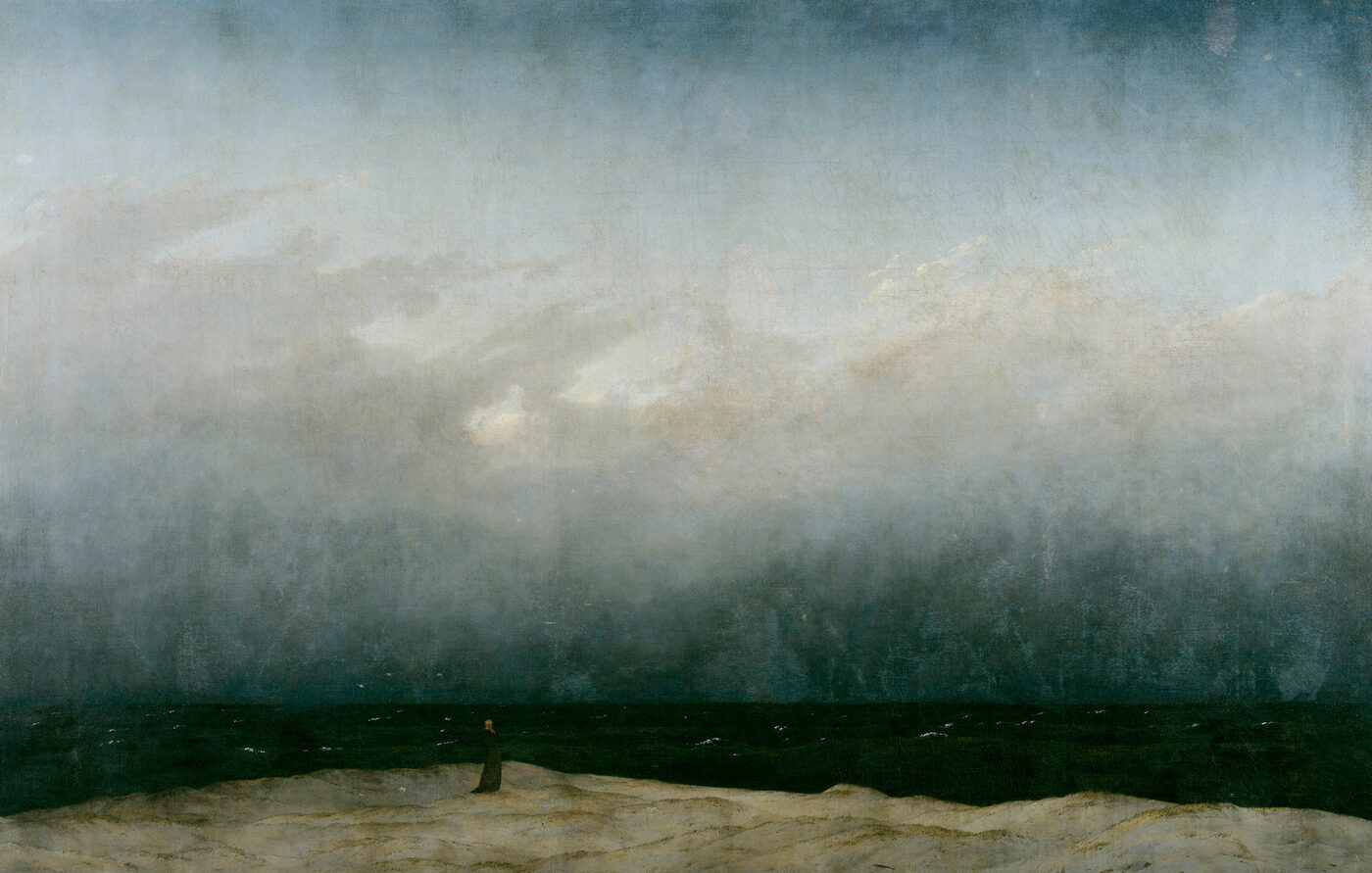
And I measured the proportions of this painting. It's exactly 3.2. So I say: well — if the Chinese-made camera has kept its sensor at the size of the painting of the German romantics, then it's wonderful. Then don't change anything to your camera. What it has — it is at his origin, his soul. And we film in this format. 3.2. And the Sony, I stretched a little to enter the 3.2.
Don't change anything to your camera — it is at his origin, his soul.
And then the 35-millimeter camera. I brought this camera for Godard, for one of his last films. But finally he didn't want to do it — he was too tired, and we did it another way. I had this camera, and I had some boxes of stock, whole 35-millimeter stock. And I wanted to make many tests for Godard that I didn't make, because he said no, no. And these tests were, for example: to change the frame rate without changing the exposition. You go from 25 images per second to one image per second — and at one image per second you are overexposed. Or starting from one, going to 25, and you are underexposed. Or changing the iris during the filming, from one to 25. Because the exposition changes. It's almost slow motion — if it's slow, it's a longer exposure, you have to close your lens. This kind of stuff. I wanted to try this. And my little crew loved trying stuff. OK — we take the camera, we make some images. We will see at the edit if I use it or not. And I used some. And this camera was in 4-by-3, 1.33. So I let the camera. Because I let things be. Just the Sony, I stretched a little bit.
Francisco — I love when they are together in this 35 millimeter — it's yellow, and the skin touches, in slow motion. It's near the end of the film, and it's one of the most haunting sequences. It's almost like a love lost in time. Or a memory of something.
VII. I make my way.
Francisco — I love that you disarmed me — to enter in your process. Because I was having these questions, I was writing. And I realized it's so beautiful to just be. It's very rare for me to have that. Your film allowed me to have that.
I wanted to ask about nature — and you can say no to my question if it's not a good question. I rewatched Goodbye to Language, which I first watched when I was sixteen, in a cinema, with my father. That film is about nature, about metaphor, about what is not human. And your film also touches on that. Did working with Godard change the way you see nature — nature being what is not human: the air, the wind, the trees, the animals?
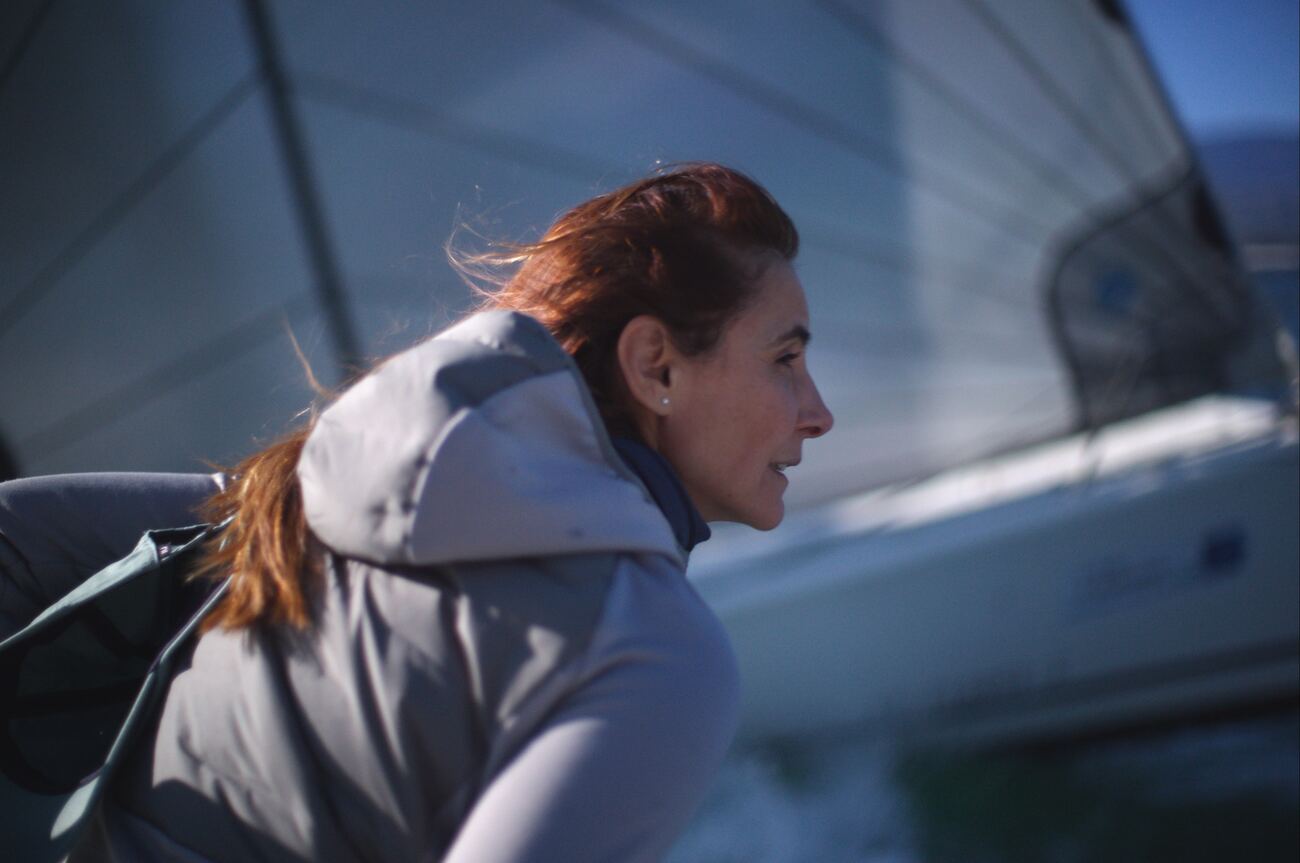
Fabrice — I will say no. But it's hard to say completely no, because I was with him twenty years, and I received a lot. But — going on the lake: I went there when I was a teenager. Another lake. And the feelings that I wanted to put in the film are something that I had when I was a teenager. When you are going sailing, just small boats, in the middle of the lake — all your problems are small like that. Because you see the city, it's small like that. And you are inside the wind, the water going very fast, very quick under you.
And I love forests. I'm not a city man. My childhood — the house of my father was in a city, but the back of the house was in the forest. So I was in the forest.
Francisco — Did you play as a child in the forest?
Fabrice — Yes — all my things in the forest. And the sky — I'm in love with the sky, because it's a kind of natural painting, always.
In fact, I could say that I was very happy that Jean-Luc became more sensitive to the nature with Goodbye to Language. Because he was mainly in the words, in the literature, the philosophy, the history. Just being contemplative — it's not very contemplative, Jean-Luc. And in Goodbye to Language, he was behind the dog — and the dog is contemplative, so Jean-Luc became a little contemplative too. And I really enjoyed this — that he could free himself a little. Even with the music: there's a moment where he puts Beethoven with the nature, with the river — this kind of super kitsch. But Jean-Luc did it. Cool. You can go. You don't have to restrict yourself and be shy with your feelings. Go, please. So it was great.
I take a lot of Jean-Luc — but more in the human things. Not as a director — although a little — but more as a man. As a man who becomes old. And his freedom of playing with tools. I agree with his freedom, because it's very rare in cinema. It's completely normal in puppet theater, where I was before — image theater, object theater. But in cinema, they are so closed, I don't know why. So I love this kind of liberty. I was completely in connection with this kind of bad boy: if there is a rule that everyone makes blue — OK, if everyone makes blue, I will do it red.
Because me too, I don't find my place in the same things as the others. I am very maladroit, you see — I'm very bad at things. If I would make a film with normal dialogue, I think I would be very bad. So I make my way. And my way makes me arrive there. Because when you make your way, you need to be sincere with your way. If you make your way and your way is not your way, you are completely lost. So I make my way, and I'm obligated to follow my feelings.
I'm obligated to follow my feelings.
VIII. Things travel. Things communicate.
Francisco — Don't be afraid to show your vulnerability — you are opening yourself to being sincere with yourself. Did you feel a bit afraid when Le Lac was first shown?
Fabrice — Before? Yes, of course. What's more than a joy, when you make something sincere in your — let me say, your loneliness? But I was not alone. There was Chloé. But still, we were just two of us in the dark edit room, during the winter. During the nights when I don't sleep. Afraid — not afraid, but — you go forward, you go forward. Then you send it to someone, and someone says: oh, wonderful, I take it in my festival. I say: OK. Incredible. But I'm not sure — why does he take my film? Why does he say all this? I expected something else. And no — he really loved my work.
And then you screen the film. And after the screening, you have people who receive what you have inside you. The things travel through the film, through the light, through the projector, through the screen, back to the hearts of people. And so I'm not alone anymore. Because things travel. Things communicate.
The things travel through the film, through the light, through the projector, through the screen, back to the hearts of people. And so I'm not alone anymore.
It's not everyone — people say, oh, I don't understand. But many, many people. Women, men, young — and also seventy years old, eighty, sixty. In Switzerland, when we made the release, I made a lot of screenings — I present the film and then I discuss. And not only people who love cinema, or specialists of cinema, or of the lake, or of sailing races. Other people, who just come to see a movie. And they — not fall in love, but they really receive it. A woman said to me: I have seen your film twice. She came from another city to see it again. And she said: you know, any time I see your film, it's like if I live again. Your film makes me live again. I said: OK — it's exactly what the character wants. Wonderful. Thank you.
And the youth prize of Locarno — it was very nice. After the screening, we were drinking in the bar, it was three in the morning. I knew there was a prize where the jury is young people. And I see five young people arriving, a little shy, with red eyes and brilliant eyes. And they come to me, and they say they love the film. And they say: please — do another film, again, quickly. Just another. You cannot have a better prize.
Francisco — Do you feel pressure? Or do you feel — wow, it's love?
Fabrice — No. OK — I will do. The young people love the cinema that you are doing. If it were only the old people of eighty, ninety years old, I would say: OK, I was born in the wrong year, I had to be born fifty years before. But no. So, for the last years of my life, I will do as much as I can.
Francisco — I remember when I worked with Paula Gaitán — do you know Paula Gaitán, the filmmaker? She is in her seventies, and I see her as the youngest filmmaker in the world. She won the youth jury prize for her film — the first film I ever worked on, which is about her mother. I do think there is a youth that, like you did with Godard, wants not only to disobey rules but to create new rules, new forms of reality. And I think your film is a call to be alive.
It connects to me in a very profound way, because I discovered recently that I have autism — I only discovered it for real this year. And your film deals with things that are unsaid, but are felt. In cinema, in society, you need to express things through words — and sometimes words are completely —
Fabrice — I know.
Francisco — Your image has the power of showing love.
IX. It's a family of cinema.
Francisco — I loved going to the Casa Azul site and seeing your image in your youth. And I saw Fogo do Vento, by Marta Mateus. For me, cinema is a beacon for destroying loneliness — and interviews, through encounters. How is your work at Casa Azul now, collaborating with Marta Mateus, with Pedro Costa? Is there a sense of community for you?
Fabrice — Casa Azul is a collective from my film school. We finished in '97, '98. We were very close — we were six students only. And we worked together, making the image for the film of the other, making the sound. And we went to Cuba, to make an exchange with the school of San Antonio de los Baños. And I pushed this idea: it would be wonderful if we make not six films, each one his own — but a collective film that we carry together. Each one makes a part, but it's one film. And for making this film, we rented a house in Havana. And the house was blue. It's a documentary film — and when we asked people to come to our house to film, we said: Viens à la Casa Azul. It was the Swiss guys' house of cinema. And the film worked well. After the festival, we decided to continue, and to name the company like that.
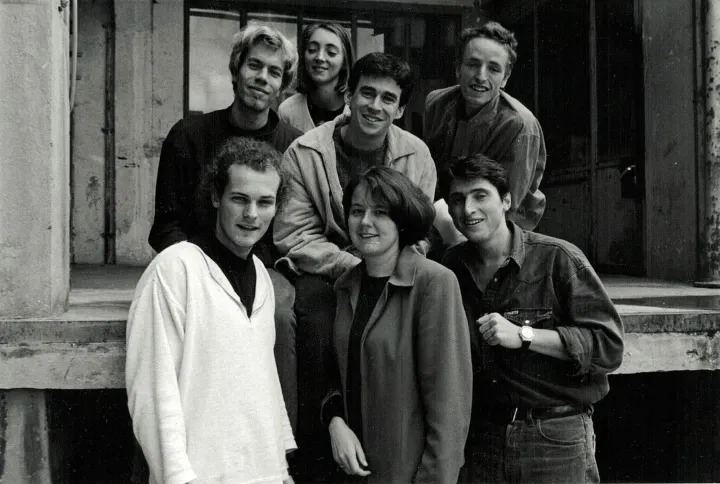
Now we are six — five directors, one cinematographer, one producer. Each one works for his project, and we share some of the money we get, to pay the rent, the materials. We have everything to make films — camera, sound, mixing, editing, color grading, everything, in 4K. We have a 35-millimeter camera. But everyone makes his own kind of film, with his own kind of form.
And me, I encountered on my side another family of cinema — a little around Godard, but sometimes further away. I met Marta Mateus around Godard, and we became friends. She was preparing her film, and I proposed to co-produce with her. I could find the money. Now I want to help Pedro Costa and his new film. But it's difficult. He's making a masterpiece — you will see. It's a musical. As Filhas do Fogo — a feature film; there is a short film also. I try to help him as I can. It has become quite impossible to find money in Switzerland to co-produce. So I let him use a microphone, some things, and I will try again to find some money in the private foundations. It's like to be in a family. It's a family of cinema.
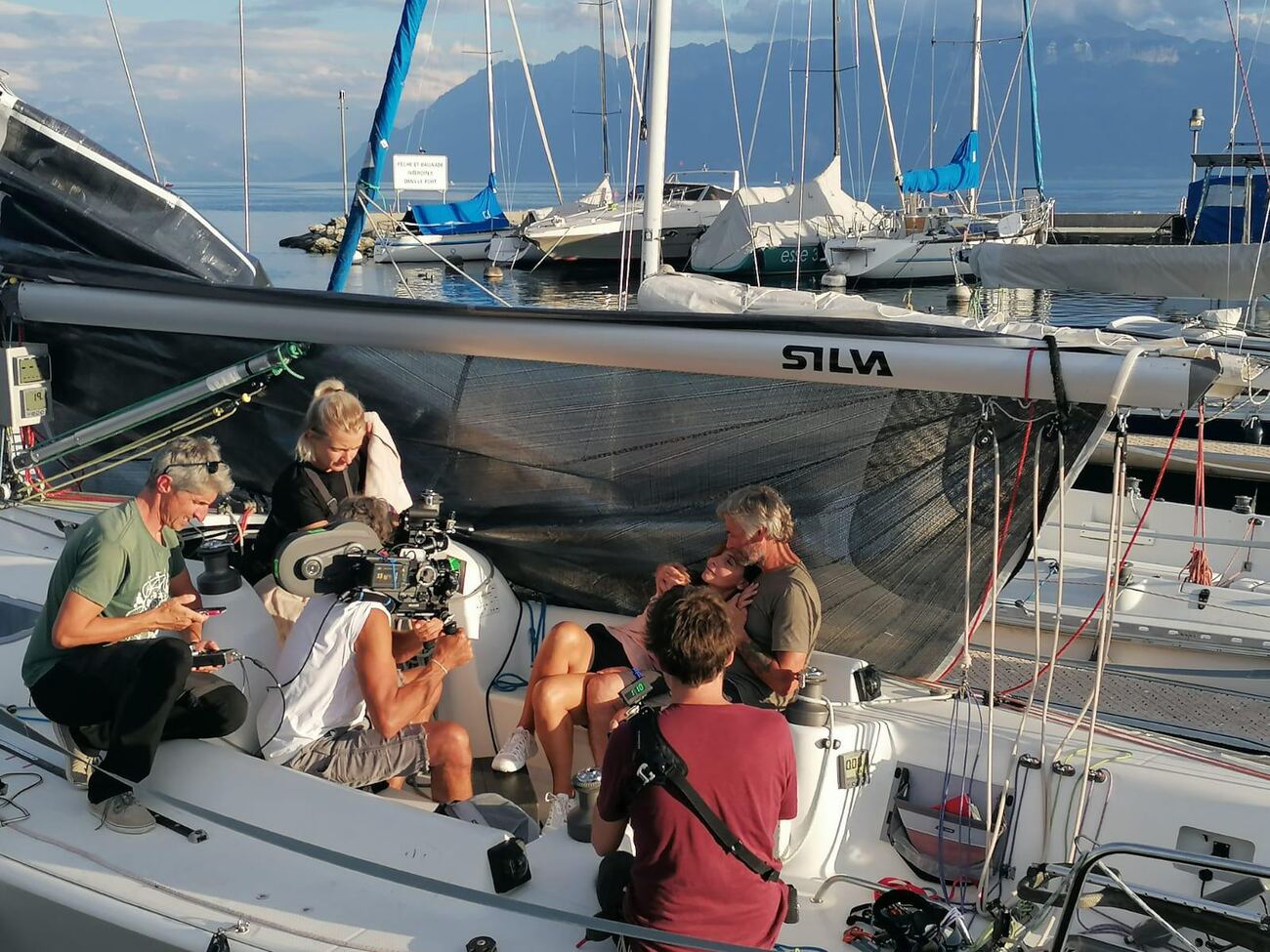
I would love for Casa Azul to be more a place of invention of cinema — a place of creation. It will come. But I love when there are many films around in Casa Azul. Today I was with someone for the mixing of his film; another of the company will make the image, will make the grading. You hear sound everywhere.
Francisco — A house of creation.
Fabrice — A house of creation. And we developed Casa Azul Labo — we received funding to have very nice equipment in image and sound for post-production. And we make this also for projects that don't get the money to be finished. Mainly those — the more difficult projects. I love when I can add, at the end: with the support of Casa Azul Labo. They come gratis. No money. And I love that the film could be finished.
X. Making our cinema from them.
Francisco — To finish, because I want to respect your time: how do you feel close to Brazilian cinema — not only modern, but in the past?
Fabrice — I don't know Brazilian cinema very well. But I know Júlio Bressane.
Francisco — He's great. I thought a lot about Garoto watching your movie — I think it's a companion.
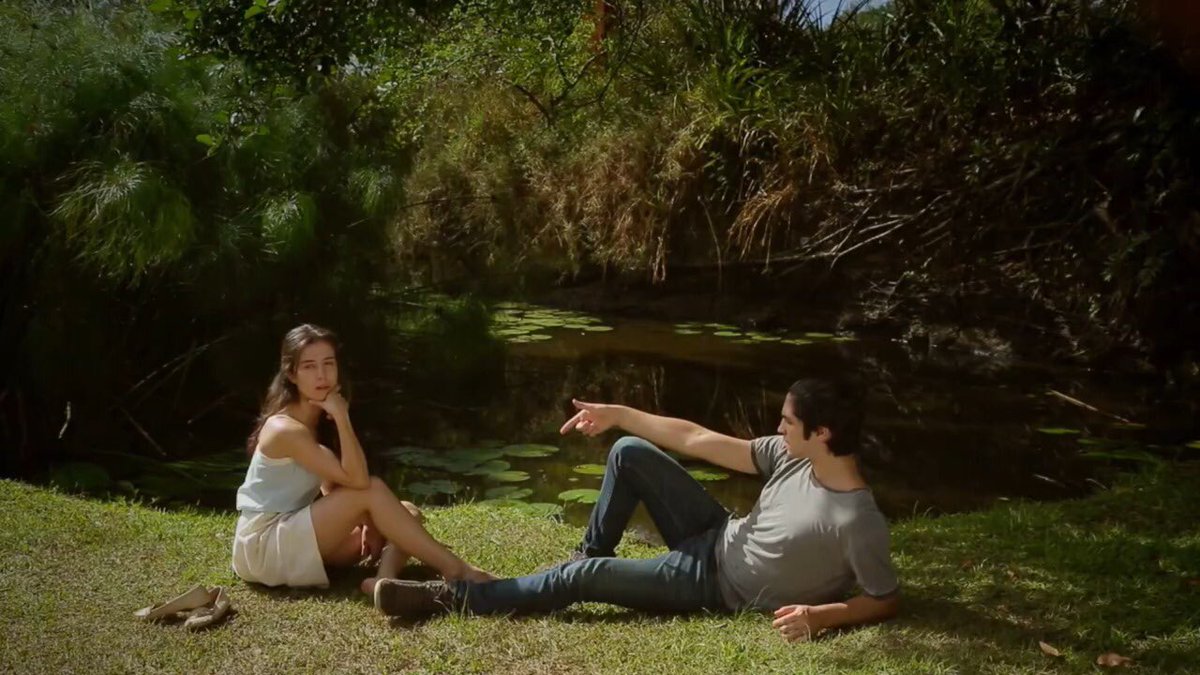
Fabrice — Júlio was president of the jury when I was jury in Locarno with Clotilde — where I met Clotilde. And I really loved him. His way of freedom. His energy of making cinema, also with young people — how he created, I don't remember the name of his company —
Francisco — TB Produções.
Fabrice — And when I was in São Paulo — the film was screened there — I discussed a little with the director of the Instituto Moreira Salles, João Fernandes. Very interesting — he's nothing with the money, he's kind of a communist. And he talked to me about the povos originários — where, for them, the storytelling is not in our way. For them, the cinema needs to be in a completely other way of how to manage story, or no story, or with the nature, or everything. And I really love to go there — to make a workshop. Not to give a workshop, but to receive a workshop. Of learning how to make films from them. Because from what I hear, it could be wonderful to re-see our world from their point of view — making our cinema from them. I would love to stay in the Amazon for six months, jumping in the sensitivity of the image and the sound, of what we can do together.
Not to give a workshop, but to receive a workshop.
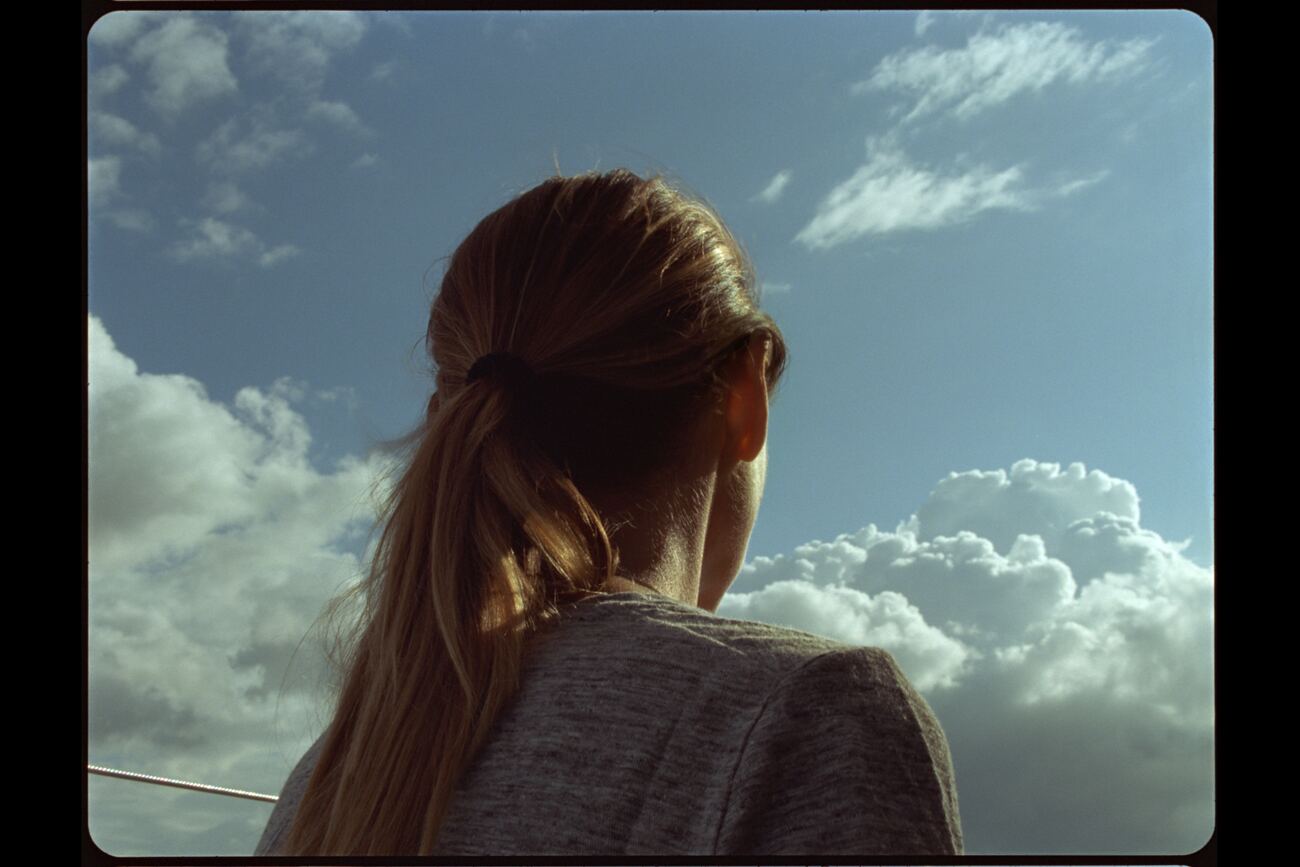
Le Lac (Switzerland, 80 min) is Fabrice Aragno's first feature film as director.
Francisco Vidal is an actor and assistant director, based in Rio de Janeiro.